This season, a club built on the spirit of its supporters will compete in Liga Super, with Kela...

The global corporate elite has officially lost its collective mind, and nowhere is this intellectual bankruptcy more glaring than in the boardroom meeting rooms of modern marketing. We are being suffocated by a tsunami of digital garbage. If I am forced to scan one more QR code on a bag of crisps just to be redirected to a broken “augmented reality metaverse” or a speculative Web3 token that possesses all the intrinsic value of a wet leaf in a Klang monsoon, I shall lose the will to live. It is a lazy, sterile, deeply cynical exercise in bureaucratic theatre designed by overpaid “suits” who think human connection is something you measure in data-harvesting clicks. They treat us like mindless data-farms, requiring nothing from our existence other than a greasy thumb and a willingness to let cookies track our souls. It insults our collective intelligence.
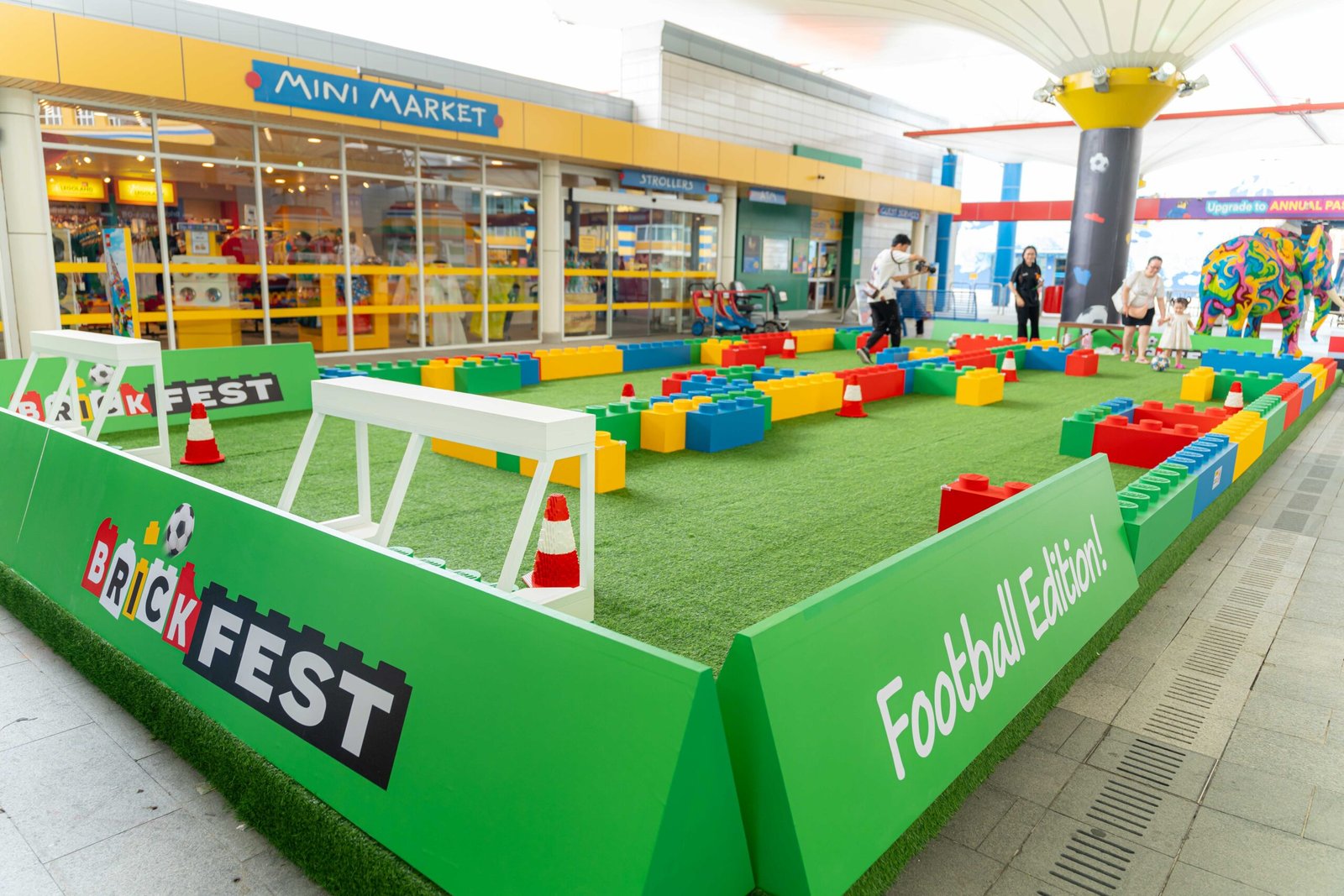
Then, out from the sweltering, palm-fringed horizon of Johor, steps LEGOLAND Malaysia. While every other theme park executive on Earth was likely approving a six-figure budget for an AI filter that makes your face look like a poorly rendered, pixelated soccer ball, the madmen in Nusajaya chose violence. Or rather, they chose thousands of sharp, unyielding pieces of ABS plastic. They launched BRICKFEST: Football Edition, a frontal, unapologetic pivot away from the digital herd during the height of World Cup fever. Instead of inviting the public to look at another screen, they invited them to step into a physical crucible of tactile chaos. It is a glorious, defiant middle finger to the tech overlords, and it might just be the most brilliant thing I’ve witnessed in a decade.
To comprehend the sheer, unadulterated bravery required to pull this off, you must understand how much corporate bigwigs worship at the altar of the algorithm. To pitch a marketing campaign that completely rejects the digital matrix—one that relies entirely on physical presence, human muscle, and old-fashioned gravity—is the corporate equivalent of driving a supercharged V8 muscle car straight through the window of an eco-friendly organic juice bar. It is loud, disruptive, and beautifully unhinged. The tech evangelists want you to believe that a child tapping an iPad screen can replicate the visceral, soul-stirring joy of sport. It cannot. A pixel cannot replicate the thump of leather against raw bone. A smartphone screen cannot simulate the thick, equatorial humidity of Johor. And an algorithm cannot match the excruciating, soul-shattering agony of stepping on a two-by-two LEGO brick in a dark room. That last one is a universal truth; it is a physical reminder that you are alive. By demanding that people actually show up in the glorious, heavy heat of the Malaysian afternoon to participate, LEGOLAND staged a punk-rock insurrection against the tyranny of the pixel.
The activation itself is structured as the “Journey of Becoming a Football Star,” and it is a masterclass in interactive design, completely devoid of corporate fluff. First, you are confronted with the Brick-tastic Arena. This isn’t a passive viewing experience; it is a merciless obstacle course that forces children—many of whom have spent the last five years glued to TikTok—to actually dribble a spherical leather object through giant, physical hazards. There are no cheat codes here. If a kid has a greasy, screen-softened thumb, it won’t help them manoeuvre a ball past a massive plastic obstacle. It forces a collision between human anatomy and the physical world, and watching a generation rediscover their legs is nothing short of magnificent.
Then we have the Brick Strike Challenge, a goal-scoring simulator governed strictly by the unyielding laws of physics, not a line of code written by a sleep-deprived programmer sitting in a cubicle in Vancouver. You kick the ball. It either flies into the net or it clangs off the frame with a satisfying, metallic thud. The feedback is instantaneous, honest, and gloriously analog. For those whose talents lie more in tactical mastermind realm than the physical engine room, the park introduced the Creative Build Stations and the Jersey Mural. This is a collaborative, slow-paced, and deeply rewarding project where hundreds of hands contribute to a massive, brick-built wall. It is the antithesis of the modern, hyper-stimulated internet. You cannot “speed-run” a LEGO mural. It requires patience, spatial awareness, and community. It is a slow, methodical construction of tribal pride, block by block.
But the absolute stroke of localised genius—the sovereignty gambit that made my cynical, jaded heart skip a beat—resides in MINILAND. They didn’t just build a generic football stadium. They painstakingly rendered the iconic Sultan Ibrahim Stadium, the home of the formidable Johor Darul Ta’zim (JDT) team, entirely out of LEGO bricks. To see this architectural marvel recreated with such staggering precision is to understand the true artistry of the medium. It is an explicit, deeply respectful nod to local football culture, transforming a global brand into a local hero. It is magnificent.
However, the crowning achievement of this entire campaign—the piece de resistance that deserves a standing ovation—is a deceptively simple promotional rule. LEGOLAND announced that the first 200 children who turn up at the gates daily wearing a football jersey get into the park completely free. Do you have any idea how brilliant that is? Most corporate brands will spend millions of dollars hiring interior designers, set builders, and consultants to create an “authentic atmosphere.” LEGOLAND completely outsourced the park’s visual identity to the public. By offering free entry, they unleashed a swirling, living sea of match-day terrace colors inside the gates. On any given day, the park becomes an unscripted canvas of football tribalism. You have the vibrant blue and red of JDT clashing visually with the classic yellow and black of Harimau Malaya, interspersed with the iconic reds of Manchester United or the pristine white of Real Madrid. It cost the park practically nothing in decor, yet it achieved something money cannot buy: raw, unmanufactured energy. The park didn’t just host a football event; it became a living stadium, fueled by the genuine passion of the fans themselves.
When you strip away the marketing jargon, the KPIs, and the boardroom presentations, you are left with a simple truth: human beings are fundamentally analog creatures. We are tired of screen notifications, we are exhausted by virtual clown filters, and we are utterly spent by brands trying to force us into digital landscapes we never asked for. LEGOLAND Malaysia’s BRICKFEST: Football Edition is a masterclass because it remembers what it means to be human. It chose the hard, physical path. It chose an ecosystem where real memories are forged through sweat, laughter, the texture of plastic, and the undeniable pull of physical gravity. They didn’t sell a virtual experience; they created a tangible memory.
As I watched a young kid, completely drenched in sweat, wearing a slightly oversized JDT jersey, triumphantly place the final brick onto a communal mural before running off to kick a real football, it hit me. The digital revolution hasn’t won. The future isn’t a pair of clunky VR goggles in a dark room. The future is right here, made of brick, bone, and unadulterated human joy. Rock on, LEGOLAND. You absolute madmen.