This season, a club built on the spirit of its supporters will compete in Liga Super, with Kela...

If you buy a classic Ferrari 250 GTO, you expect mechanical poetry. You do not expect to open the hand-beaten aluminium hood and find a rusty lawnmower engine fueled entirely by forged invoices, back-alley handshakes, and absolute greed. Yet, this is exactly what happens when you look under the hood of modern international football.
As the 2026 World Cup rolls across North America, the glossy television screens present us with a flawless product: the balletic genius of elite athletes, pristine fields, and roaring crowds. But behind the VIP glass and the corporate sponsorship banners, there is a distinct smell of burning paper. And it isn’t from the stadium concession stands. It is the Argentine Football Association (AFA) frantically trying to shred three hundred million dollars’ worth of bank statements before the U.S. federal authorities kick the door down.
Football isn’t a sport anymore. It is an unaccountable offshore banking network that occasionally employs twenty-two men to chase a piece of inflated leather around a field.
Let’s look at the plumbing. Normally, when a nation wins the World Cup, FIFA hands over a big fat check—$42 million in the case of Argentina’s 2022 triumph—to the country’s football federation. Standard stuff. In an ideal world, you use that money to build training facilities, pay coaches, and buy shoes for kids who can’t afford them. But the AFA, led by a man named Claudio “Chiqui” Tapia, took one look at Argentina’s eye-watering national tax laws and thought, “No, I don’t think we’ll do that.”
Instead, they rigged up an alternative pipe. They directed FIFA and global sponsors to bypass Buenos Aires entirely and empty the cash straight into a Miami-based entity called TourProdEnter LLC. Three hundred million dollars flowed smoothly into Florida banks. And then, like magic, fifty-seven million of it simply evaporated into thin air. Poof. Gone.
Where did it go? The FBI is currently tracing transfers that wandered off into unverified shell accounts, including thousands routed to people on public welfare benefits, and an incredible $340,000 wired to the family of a “spiritual guide” traveling with the team. Seventeen separate payments of twenty grand each for “spiritual services”. I mean, I knew the Argentine defense needed help, but paying a shaman thirty grand a month out of a U.S. bank account is quite frankly a brand-new level of administrative lunacy
FIFA, of course, has reacted with the shocked innocence of a vicar who accidentally walked into a house of ill repute. “We just followed the paperwork!” they cry.
Rubbish. For an organization that handles billions, FIFA’s compliance guidelines are supposed to look out for “Third-Party Risk.” When a client says, “Don’t pay us, pay this random private marketing LLC in Miami instead,” the compliance system is supposed to freeze automatically. If a multi-billion dollar entity accepts a “Letter of Direction” to pay a non-member company without auditing it, they aren’t victims of fraud—they are actively maintaining the blindness.
The reality, as highlighted by investigative journalist Romain Molina, is far dirtier. FIFA didn’t fail its due diligence because they are stupid; they failed it because it was politically convenient. The AFA represents a massive voting bloc in South American football. In the cartel economy of sports governance, you don’t ask your biggest political allies why they are routing World Cup prize money into Florida shell companies. You just click ‘approve’ and keep them happy.
If you think this financial shell game is a uniquely South American specialty, think again. The rot is structural, and it is global. Molina has just turned his spotlight toward Southeast Asia with a simple warning: “Next case: Indonesia.”
The Football Association of Indonesia (PSSI) is currently fracturing under the weight of its own hidden ledger. The allegations mirror the AFA crisis perfectly: systemic embezzlement of developmental funds, naturalisation cash trails, and an elite circle running out of places to hide. It has reached such a state of absolute chaos that the head of the Indonesian federation has reportedly fled the country entirely, crossing borders to seek political asylum to evade immediate arrest.
And why does FIFA let it happen? Because under their “one nation, one vote” system, the vote of a corrupt federation in Jakarta carries the exact same weight as the vote of Germany or England. Protect the local boss, look the other way when the youth academy budget turns into a new super-yacht, and presto! You’ve secured your re-election as the undisputed king of Zurich.
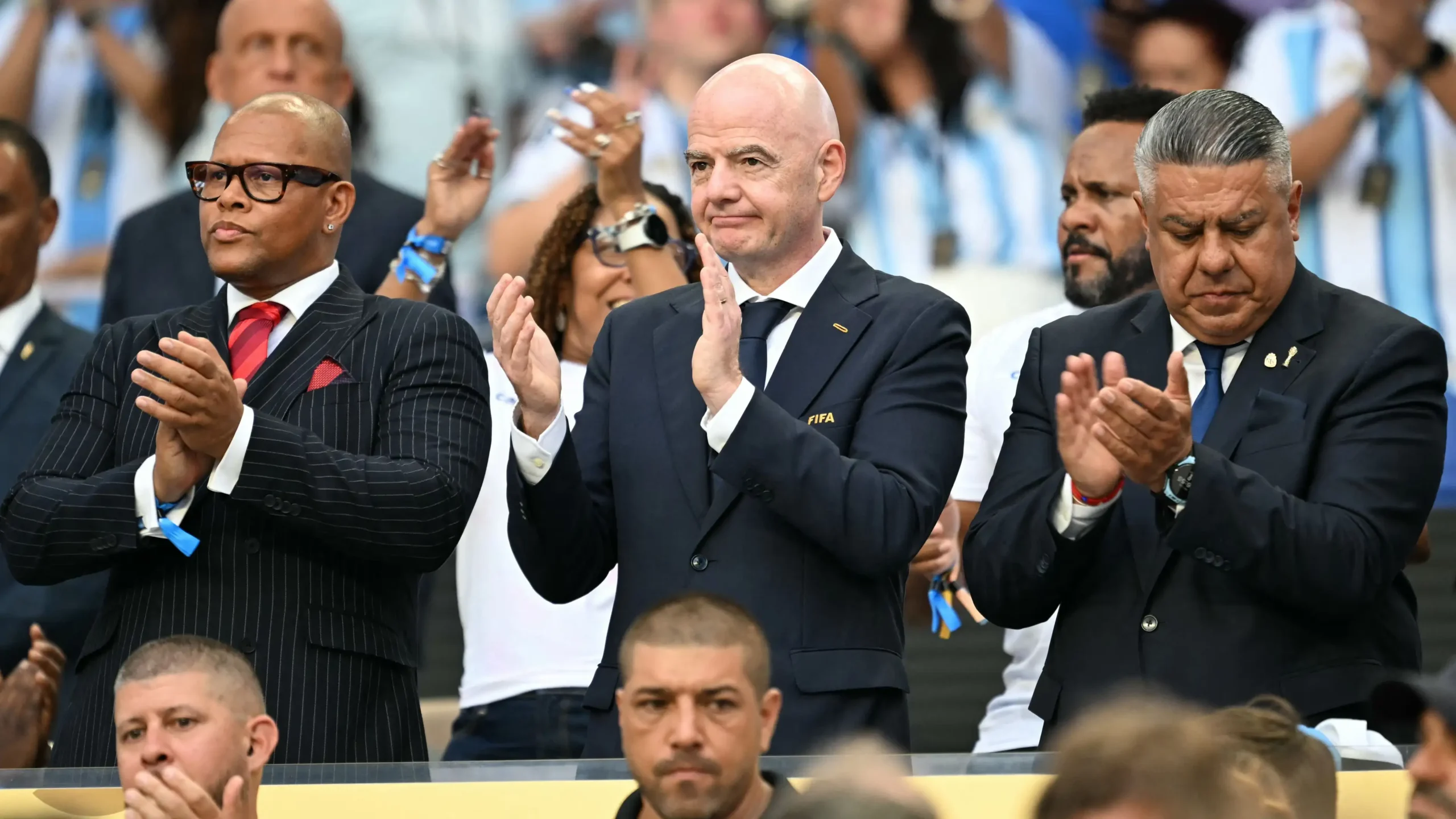
This brings us to the ultimate, cynical punchline of modern sports diplomacy: the sweeping geopolitical “bromance” between FIFA President Gianni Infantino and U.S. President Donald Trump.
The closeness between the two men is not subtle. We’ve seen Infantino invent an annual “FIFA Peace Prize” just to hand it to Trump right before the tournament draw. More absurdly, during this very World Cup, we witnessed Trump pick up the phone to personally lobby Infantino after USMNT striker Folarin Balogun received a straight red card against Bosnia and Herzegovina. In an unprecedented move that left the global football community in absolute uproar, FIFA’s disciplinary committee magically froze the mandatory suspension under Article 27, allowing Balogun to play in the Round of 16 against Belgium.
This is where the dots finally connect. The U.S. government holds a unique weapon over Zurich: control of the global dollar clearing system. Because the AFA and other corrupt federations foolishly used American banking facilities to move their dirty money, the FBI has full legal jurisdiction to look into FIFA’s entire kitchen cabinet.
If the FBI holds the electronic signatures proving FIFA turned a blind eye to $300 million in money laundering, that information becomes the ultimate geopolitical leverage. The White House doesn’t need to formally indict Infantino. The mere existence of an aggressive, active federal probe sends a clear message: We know everything your member associations are doing on U.S. soil. Now, let’s talk about how smoothly our World Cup is going to run.
Football has finally achieved its ultimate goal. It has become entirely globalised, immensely lucrative, and utterly transactional. We used to worry about whether a striker was offside. Now, we have to worry about whether his national federation is using a shell company in Delaware to hide his win bonuses.
Argentina may have just beaten England 2-1 to march into the grand final against Spain, but their real victory was secured months ago in a Miami bank vault, and the incentive to protect the scheme is now just a single win away. Infantino needs the AFA’s political votes, Trump needs Infantino’s compliance, and the FBI holds the keys to the handcuffs.
And on that bombshell, we now know why Argentina will win this World Cup again.