I have a theory about modern life. It is that we are all being slowly, deliberately, and systematica...

Normally, when a sprawling, monolithic multinational corporation announces something it bleakly refers to as a “grassroots initiative,” I feel a profound and overwhelming urge to seek shelter in a reinforced concrete bunker. Usually, these endeavours consist of nothing more than a cadre of terrified middle managers, dressed in painfully matching, brightly coloured polo shirts, descending upon a local community centre to awkwardly hand over an oversized novelty cheque. They might pose for a photograph while holding a paintbrush near a wall, and then they all immediately flee back to an air-conditioned boardroom to pat themselves on the back. It is, generally speaking, an exercise in utter, soul-crushing futility.
But last week, something rather astonishing happened. Coca-Cola—yes, the purveyors of the glorious, fizzy, mahogany-coloured elixir that has reliably cured every hangover I have ever had—actually did something brilliant. And they did it in Sabah.
Now, for those whose knowledge of geography is limited to where they can find a decent roast dinner, Sabah is a wildly spectacular place. It has jungles that are older than recorded time, a mountain so vast it creates its own weather system, and orangutans. It is utterly magnificent. However, historically speaking, if you were a young lad or lass growing up in a remote Sabahan district, and you happened to possess a God-given, natural-born genius for kicking a spherical object into a rectangular net, you were a bit stuffed. The talent pool there is deeper than the Mariana Trench, but access to the sort of high-end sports science that transforms a good player into a professional one has been basically non-existent.
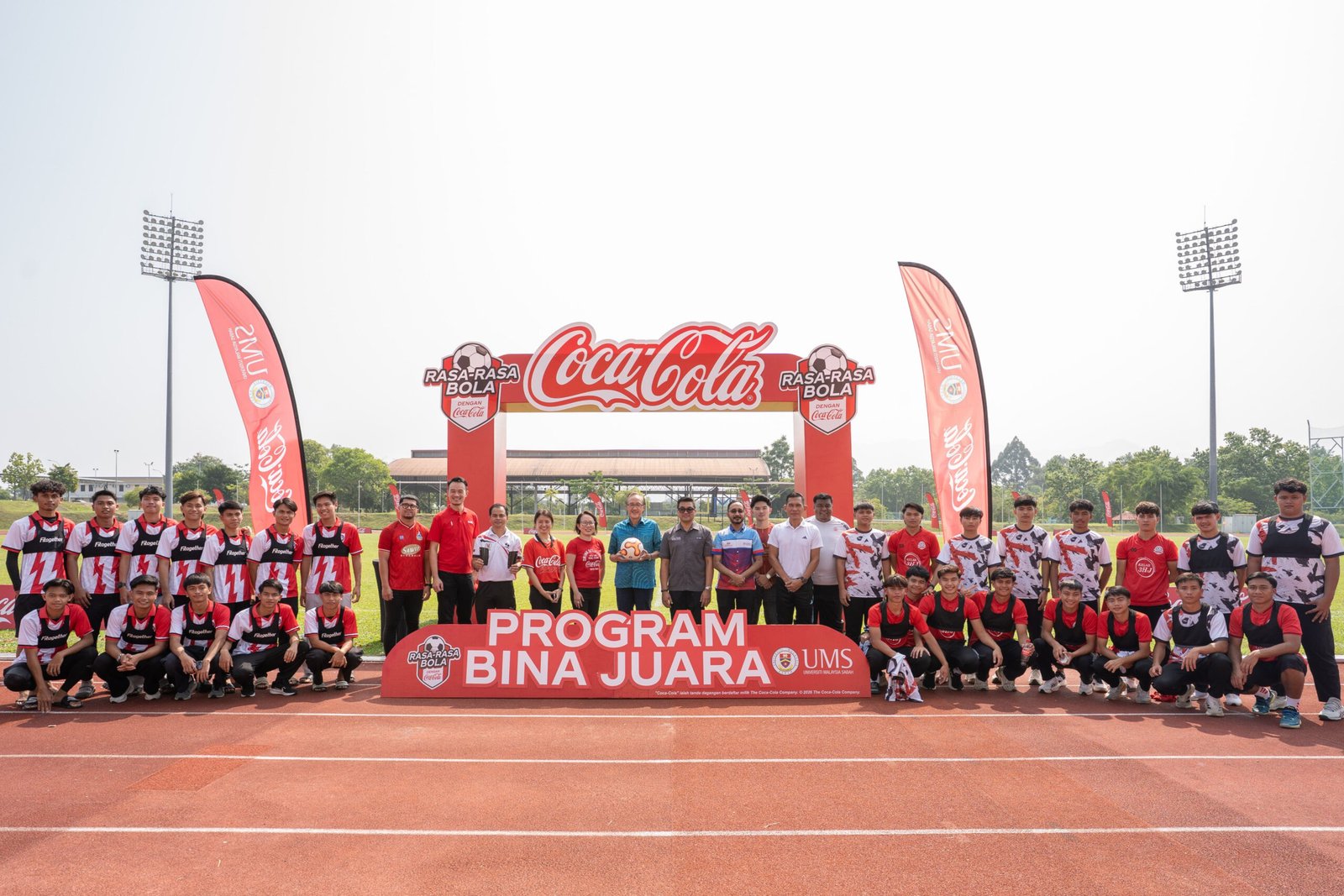
Until now. Coca-Cola, in a fit of what I can only describe as staggering common sense, has teamed up with Universiti Malaysia Sabah (UMS) to launch a programme called “Coca-Cola: Bina Juara.” And having read through the details, I have to say, it is an absolute triumph.
In the old days, which wasn’t actually that long ago, football coaching at the grassroots level consisted entirely of a man with a red face and a poorly fitted tracksuit standing on the edge of a waterlogged pitch, eating a meat pie, and screaming “get stuck in!” at a group of terrified twelve-year-olds. If you wanted to measure a player’s performance, you looked at how muddy their knees were at the final whistle.
But “Bina Juara” has hurled that archaic nonsense straight into the bin. They haven’t just turned up with a bag of cheap plastic cones and some bibs that smell of damp dog. No, they have arrived armed to the teeth with actual, unadulterated science.
They are giving these kids GPS performance tracking vests. Just think about that for a moment. We are talking about the sort of technology usually reserved for elite athletes or tracking the migratory patterns of the great white shark. These vests don’t just tell you where a player is on the pitch; they measure their physical preparedness, their work rate, and presumably, whether they had too much pudding for lunch.
But it gets better. They have brought in AI-powered match analysis. That means there is a cold, unfeeling electronic brain—probably housed in a server room somewhere, glowing ominously—watching these young players, analyzing their tactical awareness with the ruthless precision of a Victorian headmaster. It sees every out-of-position run, every brilliant pass, every momentary lapse in concentration, and feeds it all back as pure, glorious data.
And as if that wasn’t enough, they are using “smart ball performance testing.” I have no idea how you make a football smart. Presumably, you don’t send it to Oxford to read History. But this heavily weaponized sphere can apparently measure the technical ability of the person kicking it. It is an intelligence-gathering operation that makes MI6 look like a group of toddlers playing with two tin cans and a piece of string.
This entire technological armada, officiated by none other than the Deputy Chief Minister II of Sabah, YB Datuk Seri Panglima Haji Masidi Manjun, means that local coaches no longer have to guess. They have hard facts. They have analytics. They can look at a young player from a small village and know, definitively, exactly what they need to do to improve.
As Claudia Chan, a very important-sounding senior director at Coca-Cola, rightly pointed out, football is a shared passion. It is the lifeblood of communities. But passion without direction is just a lot of people running about getting out of breath. By providing this level of technology, Coca-Cola isn’t just ticking a corporate social responsibility box; they are genuinely democratizing elite sports science. They are taking the tools of the millionaires and giving them to the kids in Sabah.
It is a blindingly good idea. It builds discipline, it fosters ambition, and it replaces guesswork with undeniable mathematics. So, I must respectfully tip my hat to the fizzy drink empire. They haven’t just painted a wall. They’ve fundamentally upgraded the entire system. And frankly, that is the greatest grassroots initiative… in the world.