This season, a club built on the spirit of its supporters will compete in Liga Super, with Kela...

Geopolitics is normally a subject best left to men in grey suits who drink sparkling water and look terribly concerned on the six o’clock news. But every now and then, the chaotic, messy reshuffling of world affairs produces something so monumentally magnificent that you want to stand on top of a coffee table and cheer.
Right now, the Middle East is, frankly, in a state of absolute turmoil. The conflict involving Iran and the US has shut down airspace, grounded commercial jets, and turned international sports calendars into a shredded pile of paper. Golfers are stranded in airports, football tournaments are fleeing across borders, and Formula 1 had a massive, gaping hole in its October schedule where the Bahrain and Saudi Arabian races used to sit.
Stefano Domenicali and the bean-counters at Liberty Media were sweating. F1 broadcasting contracts are terrifyingly strict—miss a race, and TV executives start demanding their billions back. They needed a track. Fast.
Enter Malaysia.
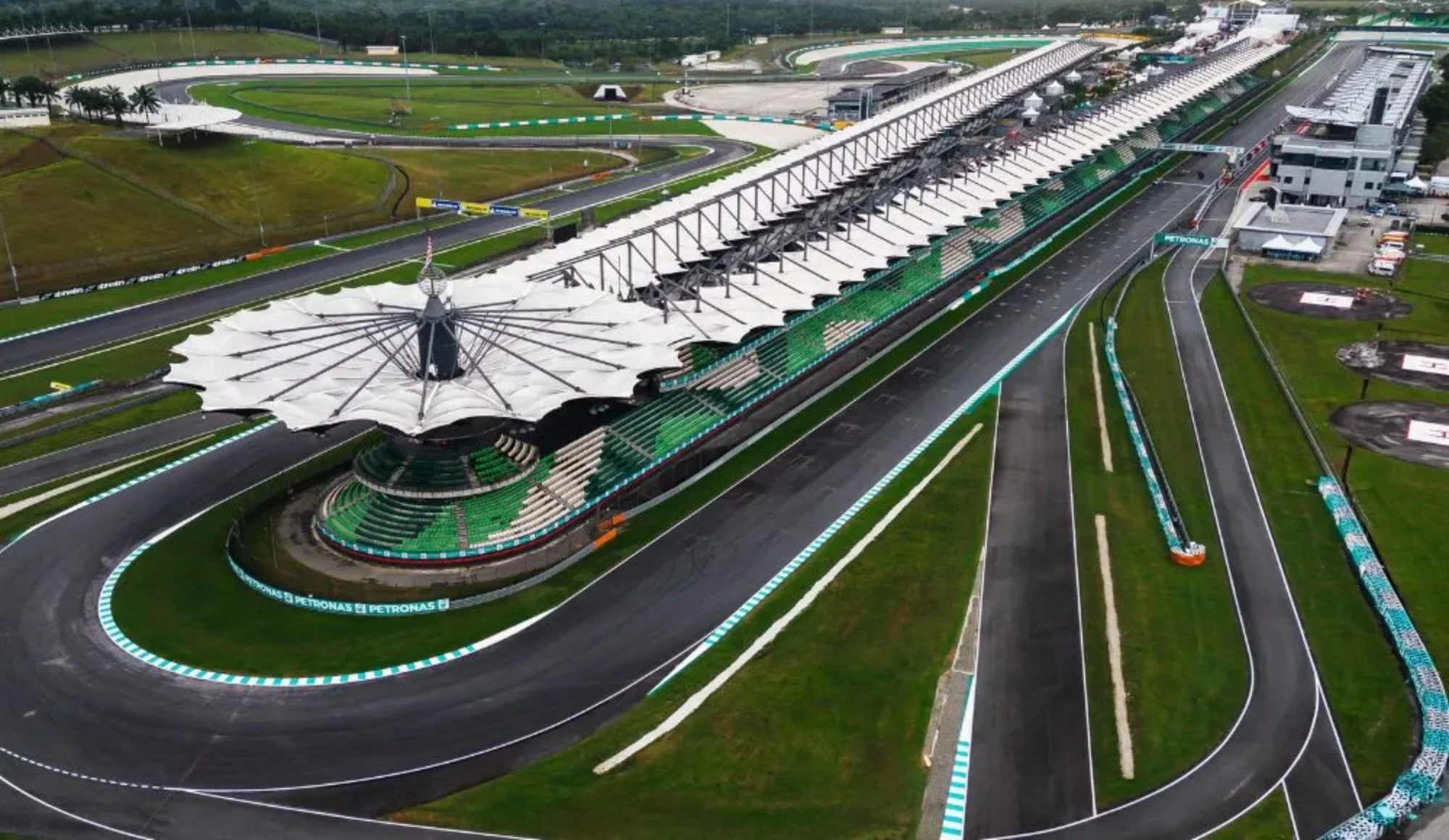
On July 26, the FIA announced that the October slot between Baku and Singapore had been filled. The race will take place at the Sepang International Circuit.
Now, if you look at the official press release, you will see a title so breathtakingly ridiculous it could only have been cooked up by lawyers who haven’t seen daylight in a decade: “The Formula 1 Gulf Air Bahrain Grand Prix in Malaysia.”
Read that again. They are holding the Bahrain Grand Prix in a country four thousand miles away. It’s like announcing that the Oktoberfest will be hosted this year in a damp cafe in downtown Kemaman.
But behind the hilarious naming nonsense lies the absolute deal of the century. You see, Malaysia gave up hosting F1 back in 2017 because the annual hosting fee—somewhere in the realm of 300 million Ringgit—was deemed entirely insane by the government. And they were right! Paying seventy million US dollars just to let twenty millionaires drive in circles for two hours is financial lunacy.
So how did Malaysia get it back? Simple. Bahrain is paying for it.
Bahrain has the hosting contract, Bahrain has the sponsors, and Bahrain has the oil money. Malaysia is effectively just lending them a bitumen strip in the jungle, opening the gates, and charging them rent. It is, without hyperbole, the most glorious piece of opportunistic financial manoeuvring since someone sold a picture of a digital monkey for two million dollars.
Financial chicanery aside, the real reason we should all be weeping tears of joy into our coffee is the racetrack itself.
Modern F1 tracks are mostly rubbish. They are sterile, soulless ribbons of asphalt carved out of parking lots in Las Vegas or squeezed between concrete barriers in Miami so influencers can drink overpriced cocktails on fake yachts. They are designed by committees, approved by accountants, and completely devoid of soul.
Sepang, built back in 1999, is the exact opposite. It was designed by Hermann Tilke before he lost his mind and started designing dull street circuits.
Sepang is vast. It’s wider than a motorway, which means drivers don’t just line up like ducklings; they can actually pass each other. Turns 5 and 6 are high-speed, soul-testing sweeps that load g-forces onto a driver’s neck until their helmet feels like it’s filled with lead. Turn 15 is a treacherous, off-camber hairpin that punishes the slightest mistake by sending multi-million-dollar carbon fibre sleds slithering into the gravel.
And then there’s the weather. Sepang isn’t just a race track; it’s an equatorial pressure cooker. One minute the track is 50 degrees Celsius and baking the tires into black sludge, and the next, a tropical monsoon arrives with the force of a burst dam, turning Turn 1 into a jet ski park. It is unpredictable, brutal, and brilliant.
If having Formula 1 back at Sepang from October 2 to 4 wasn’t enough to make petrolheads swoon, the universe decided to turn the volume up to eleven. Because just four weeks later, from October 30 to November 1, the two-wheeled lunatics of MotoGP descend upon the exact same stretch of tarmac for the Malaysian Grand Prix.
Think about what that means. In the span of a single month, Sepang will host the absolute pinnacle of four-wheeled aerodynamic madness and the absolute pinnacle of two-wheeled, 220-mph suicide machines. It is a month-long festival of noise, burning rubber, and high-octane spectacle.
For track organisers, hosting back-to-back global flagship events in a single month isn’t just a sports story—it’s an economic nuclear strike. The grandstands will barely have time to cool down before another wave of 100,000 screaming fans, international broadcast crews, and corporate jet-setters floods through Kuala Lumpur International Airport.
The genius of this move doesn’t stop at the chequered flag.
For years, the Sepang International Circuit sat on a staggering 300-hectare land bank surrounding the circuit. Half of it was doing absolutely nothing—just lush, humid green jungle listening to the faint hum of passenger jets landing at nearby KLIA.
The circuit’s management has been desperately trying to pitch a master plan to turn this giant plot into a year-round automotive, lifestyle, and commercial wonderland. Hotels, driving academies, engineering parks, concert venues—the works. But getting international investors to care about a track that no longer had F1 was like trying to sell a ski resort in the Sahara.
Now? Sepang’s phones will be ringing off the hook.
When the entire global circus of billionaires, corporate sponsors, team principals, and real estate moguls lands in Sepang this October, they won’t just see a race track. They will see prime development land sitting right next to an international airport in the middle of Southeast Asia. The return of F1—even under the guise of a Middle Eastern passport—just lit a giant, roaring bonfire under Sepang’s property values.
We live in an era where sports administration is usually depressing. Events are sold to the highest bidder, traditional venues are binned for sterile city streets, and fans are treated like walking wallets.
So let us celebrate this absurd, wonderful glitch in the system.
Formula 1 is going back to one of the greatest racetracks ever built. The drivers are terrified of the humidity, the fans are ecstatic, the local developers are rubbing their hands together in glee, and Bahrain is footing the bill.
It is mad. It is illogical. It is entirely ridiculous. And it is the best news motorsport has had in a decade.