One hundred and fifteen charges were laid. One hundred and fourteen were upheld. I have spent a deca...

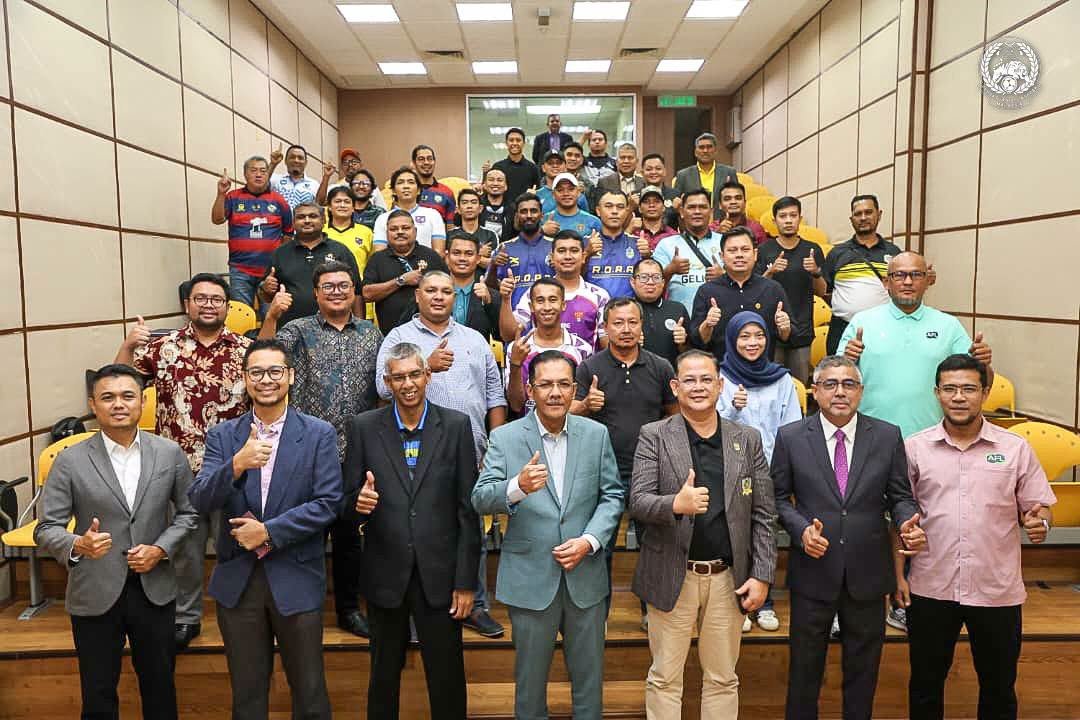
Normally, when a national sports governing body summons its executives to an echoing conference room to announce a “new initiative,” your immediate instinct is to find the nearest emergency exit. Nine times out of ten, these affairs are catastrophic exercises in hot air. You get a collection of men in heavy suits, drowning in lukewarm tea and stale sandwiches, nodding gravely at slides packed with hideous corporate drivel like “holistic grassroots alignment” and “synergistic ecosystem frameworks.” And after three agonizing hours of throat-clearing, nothing changes. The grassroots remains a muddy, neglected mess, and everyone heads home feeling thoroughly pleased with themselves.
Which is why what happened a few days ago at Wisma FAM in Kelana Jaya wasn’t merely surprising; it was a bolt of pure, unadulterated common sense.
The Football Association of Malaysia, spearheaded by President Dato’ Ab Ghani Hassan and the Amateur Football League board, officially launched the team briefing for the 2026/2027 Liga A2 Amatur. In the grand, glossy circus of modern sport, amateur players usually get shoved into a dark cupboard and forgotten about. The glittering lights, the eye-watering salaries, and the television cameras are aimed exclusively at top-flight superstars, leaving the amateur game to languish in obscurity.
For decades, the journey from amateur footballer to professional athlete in this country has resembled trying to scale a vertical glass cliff in greasy mittens. You might possess the left foot of an angel and the vision of a chess grandmaster, but if no one with a clipboard happens to be watching your match on a sodden village pitch, you are completely out of luck. You are condemned to spend your athletic life dodging bone-crunching tackles from a local butcher called Keith who plays centre-back purely to vent his weekly workplace frustrations.
The gap between casual weekend kickabouts and the unforgiving theatre of professional football has always been too vast, too terrifying, and largely impassable.
Until now. With the launch of Liga A2 Amatur, FAM has actually built a functioning bridge.
Consider the scale of it: seventeen teams from every corner of the country, divided sensibly into four distinct zones—North, Central, East, and South. The campaign kicks off on the 14th of November and grinds all the way through to the 24th of April. That is not a fleeting weekend carnival where everyone gets a plastic medal and an orange slice; that is five solid months of proper, competitive combat.
And the team sheet is a gloriously eclectic tapestry of regional pride. You have the Kuala Perlis Titans, KRFC Butterworth Rangers, Melaka FC’s under-twenties, Perak FA II, Sg. Merab, and Raub STW. And my personal favourite: Syarikat Air Terengganu, or Satu FC. A football club representing a state water utility board. How utterly brilliant is that? There is something deeply poetic about a team fielded by the people who supply your tap water turning up on a Saturday to thoroughly outplay an opponent.
By organizing these clubs into a disciplined structure with Local General Coordinators, FAM is removing the guesswork. They are giving a nineteen-year-old from a small town a genuine, measurable stage to prove his mettle under real pressure.
However. And it is a rather enormous “however.”
FAM has done the heavy lifting by building the competition, but for this initiative to genuinely change lives, people need to actually see it. And this is where my gaze turns sternly toward Angkasapuri, home to Radio Televisyen Malaysia.
What, exactly, is national broadcaster RTM doing on weekend afternoons? If you flick through their channels, you are usually greeted by a documentary on tapioca farming, an archaic rerun of an orchestra, or an earnest panel show discussing soil erosion.
RTM has a public charter. Their entire existence is funded to serve the nation, celebrate local culture, and elevate national talent. What could possibly fit that brief better than young Malaysians fighting tooth and nail for their sporting futures?
Now, I understand the executives in Angkasapuri might clutch their pearls at the thought of disrupting prime terrestrial schedules for amateur football. Fine. Keep your tapioca documentaries on the main broadcast. But what about RTMKlik?
In this day and age, setting up cameras and beaming a match feed onto a streaming platform costs virtually peanuts. It requires a handful of cables, an internet connection, and someone with a pulse to operate the mixer. By streaming Liga A2 matches on RTMKlik, RTM wouldn’t just be filling digital airtime; they would be transforming the entire ecosystem.
Suddenly, a scout in Kuala Lumpur doesn’t have to guess how a winger from Kuala Perlis handles a high cross; he can watch it live on his tablet. Parents and communities across Terengganu, Penang, and Melaka can rally behind their local boys.
FAM has stepped up and laid the foundation. Now it is RTM’s turn to pull their fingers out, switch on the digital cameras, and broadcast it to the nation. Because giving these boys a proper stage is great. But letting the country watch them conquer it? That would be truly spectacular.