I have a theory about modern life. It is that we are all being slowly, deliberately, and systematica...

Modern football is dead. It was murdered, quite deliberately, by a shadowy cabal of billionaire oligarchs, spreadsheet-wielding hedge fund managers, and FIFA bureaucrats who genuinely believe the sport belongs in a sterile, temperature-controlled stadium in the middle of a desert, accessible only to corporate entities and influencers named Hugo. To witness a match in Europe these days is to subject oneself to a masterclass in human misery. You sit on a freezing concrete slab in a drizzle, paying forty pounds for a lukewarm pie that tastes of despair and damp cardboard, surrounded by angry men named Gary screaming profanities at a teenage millionaire. It is clinical. It is joyless. It is rubbish.
And then, you open your eyes in Kuantan, Malaysia, at ten o’clock on a blinding Sunday morning, right after the madness has unfolded.
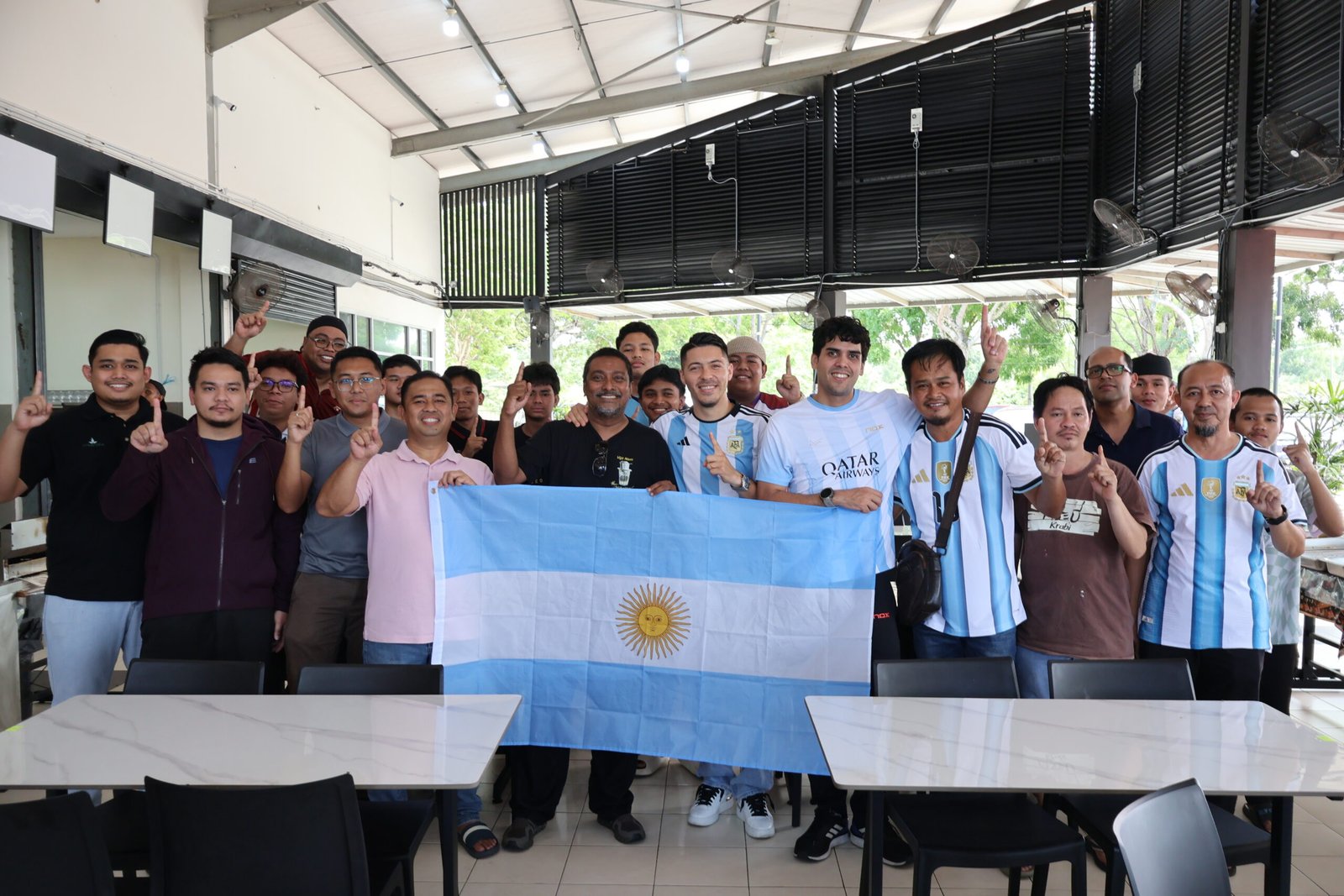
While the rest of the planet tuned in to watch the World Cup group stage wrap up between Argentina and Jordan on hyper-commercialised television networks, the real epicentre of footballing civilisation yesterday morning was the Tahfiz Food Court in Tanjung Lumpur. Let us pause to contemplate the sheer, magnificent madness of what just happened. This is an outdoor food court, deeply rooted next to an Islamic religious academy, adjacent to the Yayasan Pahang complex. It is a sanctuary of spiritual contemplation and mid-morning carbohydrate loading. And yesterday, it was transformed into a roaring, caffeine-fuelled amphitheater of South American football fever.
The atmospheric setup defied every known law of logic and sociology. It shouldn’t have worked. It really shouldn’t have. Yet, it was spectacular.
The D’Pondok kitchen crew spent the morning fighting a culinary blitzkrieg. The gimmick cooked up by these administrative geniuses was simple yet profoundly dangerous to the local supply of condensed milk: anyone who turned up wearing an Argentine jersey got a free glass of Teh Tarik or Teh Ais, alongside Spanish-inspired churros.
Do you have any idea what happens when you offer free liquid sugar and fried dough to a Malaysian? It triggers a demographic migration. By 9:30 AM, the venue was hit by a tidal wave of blue-and-white fans. We are talking about local Kuantan folks—university students from UCYP, off-duty healthcare workers from the nearby private hospital, and entire extended families—all squeezed into identical reproduction Messi kits. The visual comedy was exquisite. It was a Latin American footballing patriotism funded entirely by the local desire for free breakfast. The humidity was thick enough to chew, the smell of sambal mingled with frying pastry, and the air vibrated with the collective chatter of a community collectively dodging their Sunday morning chores to watch a match happening a hemisphere away.
But the true crown jewel of this entire circus was the celebrity host. Ladies and gentlemen, enter Sergio Fabian Ezequiel Agüero.
To understand Agüero is to understand the beautiful, chaotic tapestry of modern globalisation. He is an Argentine-born striker by birth, a naturalised Malaysian citizen by choice, and a Tok Gajah legend by royal decree. He was the captain of Sri Pahang FC. He is, for all intents and purposes, a rockstar who traded the pampas of South America for the coastal breeze of Kuantan.
Watching Agüero navigate this event was a masterclass in cultural surrealism. He possesses the effortless, cinematic cool of a Buenos Aires talisman, yet he handled the local environment with the practiced ease of a veteran politician. There was a profound, theatrical grandeur to the man. You watched him break down high-stakes half-time tactics with the intensity of a man explaining the secrets of the cosmos, all while deftly manoeuvring two plates of churros and ensuring the big scoop of chocolate dip doesn’t stain his Argentine jersey. It was an absolute triumph of human adaptability. He represents the ultimate synthesis of two entirely different worlds: the raw, unadulterated passion of the La Bombonera stadium, repackaged and delivered straight to a seaside town in Pahang.
What we witnessed this morning was the birth of a new subculture: “Brunch n’ Bola.” In the West, football viewership is inextricably linked with the consumption of ungodly amounts of lager and the subsequent, inevitable fistfights in the concourse. It is a tribal, aggressive, and deeply stressful endeavour.
The Malaysian alternative, however, was a revelation. It stripped away the toxic machismo and replaced it with communal indulgence. The rowdy, heart-stopping tension of the World Cup fixture was seamlessly absorbed by the wholesome, family-filled atmosphere of a local food court. Instead of throwing pints of beer at the screen in a fit of rage, the local Uncle merely took an aggressive sip of his Teh Tarik and muttered a quiet, devastating critique of the referee’s ancestry.
The local students from UCYP sat shoulder-to-shoulder with nurses who had just finished a gruelling night shift at the hospital nearby, all unified by the shared anxiety of the match and the mutual appreciation of a well-fried churro. The religious students from the adjacent Tahfiz academy looked on with mild amusement as a sea of grown men in polyester shirts wept over a disallowed goal. It was an insult to the stuffy, corporate suits who try to sanitise this sport. It proved that football does not belong to the boardrooms; it belongs to the people who are willing to wake up early, sweat through their clothes, and scream at a projector screen while eating condensed milk.
Let the bigwigs in Zurich have their air-conditioned VIP boxes and their champagne flutes. Let them think they own the game because they have the rights to the logo. They know nothing.
The soul of football isn’t found in a billionaire’s portfolio. It is alive, well, and screaming its lungs out in Tanjung Lumpur. It was found this morning in the brilliant absurdity of a tropical heatwave, where an Argentine wizard and a mountain of fried dough brought an entire town to its knees. As the final whistle blew and Kuantan erupted into a chorus of cheers fuelled by caffeine and pure, unadulterated passion, the message to the corporate elites was loud and clear.
You tried to kill our game, you suits. But the streets of Pahang just took it back.