I have a theory about modern life. It is that we are all being slowly, deliberately, and systematica...


Football, when you strip away the billionaire owners, the neon boots, and the players who fall over clutching their shins if a gentle breeze passes by, is supposed to be a simple game. You kick a ball into a net, and everyone goes wild. But leave it in the hands of the suits, the politicians, and the governing bodies, and it inevitably mutates into a bloated, hyper-bureaucratic catastrophe.
Right now, the post-2026 World Cup landscape looks like a multi-car pileup on the Autobahn. Look at Germany. The mighty Nationalmannschaft crashed out in the Round of 32 to Paraguay—a country whose chief export is soy beans—and the entire nation had a collective nervous breakdown. In a fit of sheer structural desperation, the German Football Association effectively fired Julian Nagelsmann and went crawling on their knees to Jürgen Klopp. They didn’t just offer him a manager’s coat; they handed him the keys to the entire country’s footballing infrastructure, hoping he might magically fix their broken academies like a tactical Messiah.
Meanwhile, in East Asia, the reactions to World Cup failure were beautifully distinct. In Japan, Hajime Moriyasu bowed deeply to the fans, took 100% of the blame for their early exit like an honourable samurai, and went about his day. Across the water in South Korea, the Prime Minister skipped the politeness entirely and deployed actual government investigators into the Korean Football Association to find out why the national team looked so utterly clueless on the pitch.
But all of this—the high drama, the political tribunals, the Klopp-sized mega-contracts—pales in comparison to the absolute, unmitigated comedy show currently unfolding in Southeast Asia. Welcome, ladies and gentlemen, to Malaysia.
If you were to walk into the headquarters of the Football Association of Malaysia (FAM) and ask what the long-term strategy is, you would likely be met with the same blank stare you get when you ask a golden retriever to calculate your income tax. For decades, expecting the FAM to run a cohesive, successful national setup was very much like buying a highly temperamental, 1980s Italian sports car. You didn’t expect it to win the Monaco Grand Prix; you were simply amazed if it started in the morning without catching fire or losing a door.
Right now, the Malaysian footballing public is locked in a ferocious debate over who should take the wheel at the upcoming leadership elections. The fans and the local pundits are screaming for immediate glory. They want qualification for the next Asian Cup. They want to win the inaugural FIFA ASEAN Cup. They want a trophy cabinet stuffed with silver to prove they matter.
What utter nonsense. Demanding trophies from a fundamentally broken system is like demanding a three-star Michelin meal from a microwave that only has one working button.
The truth is, the bar for success in Malaysian football hasn’t just stooped to the floor; it has broken through the floorboards, dug through the earth’s crust, and is currently being studied by deep-sea oceanographers. And that, weirdly, is the best news the country has had in forty years. Because when the baseline of expectation is zero, you don’t need to be a genius to be a hero. You just need to possess the basic administrative competence of a reasonably bright turnip.
To understand how Malaysia got here, we have to look back at the spectacular implosion that happened earlier this year. In January 2026, the entire FAM Executive Committee resigned en-masse. It wasn’t a dignified transition of power; it was a panicked scramble for the lifeboats after a series of public relations disasters, public outcries, and organisational gridlock. It was the footballing equivalent of an aging, bloated 1970s rock band finally realizing they’ve forgotten the chords to their own hit songs and walking off the stage mid-set.
With the house empty, the Asian Football Confederation (AFC) finally stepped in. They didn’t arrive as saviors carrying bags of cash; they arrived like strict, no-nonsense mechanics carrying a massive, legally binding clipboard. They conducted a ruthless quality audit across eleven operational areas of Malaysian football and discovered that the whole operation was running at a dismal “Level 2 (Pre-Intermediate)” standard.
So, they didn’t ask FAM to get better. They forced them to rewrite the law. At the Extraordinary Congress, the governing body unanimously adopted the new FAM Statute 2026. And it is, without question, a magnificent piece of work. It is a foolproof, step-by-step manual on how to stop being terrible.
First, they took a chainsaw to the bloated Executive Committee, hacking it down from a chaotic room of seventeen people to a lean, manageable squad of eleven. The post of Deputy President? Thrown straight into the bin. Fewer seats mean fewer politicians trading favors in the back rooms, and nowhere left to hide when things go wrong.
Second, they put an end to the tradition of using the football association as a cushy retirement home for out-of-work politicians and feudal lords. Under the new rules, if you want a seat on the Exco, you must be under 70 years of age, possess at least five consecutive years of actual, verified football administration experience, and pass rigorous integrity screenings by the Royal Malaysia Police and the anti-corruption commission.
But the real stroke of genius in the new statute is the destruction of the “State FA” monopoly. For generations, Malaysian football was controlled by regional bureaucrats who cared more about their local fiefdoms than the national game. The AFC ripped up that script, expanding the voting block to thirty-nine entities. For the first time in history, the twelve clubs playing in the Malaysia Super League get automatic voting rights, alongside the professional players’ union and the referees. The power has shifted away from the suits and toward the people who actually touch the football.
This brings us to the upcoming elections. The keyboard warriors on social media are looking for a saviour—a charismatic figurehead who will promise the earth and deliver a golden age.
They are looking for the wrong thing. The next President of the FAM does not need to be an inspirational visionary. They do not need to be a tactical mastermind, and they certainly do not need to spend millions on hasty, short-term band-aids like naturalising random foreign players to win a regional cup.
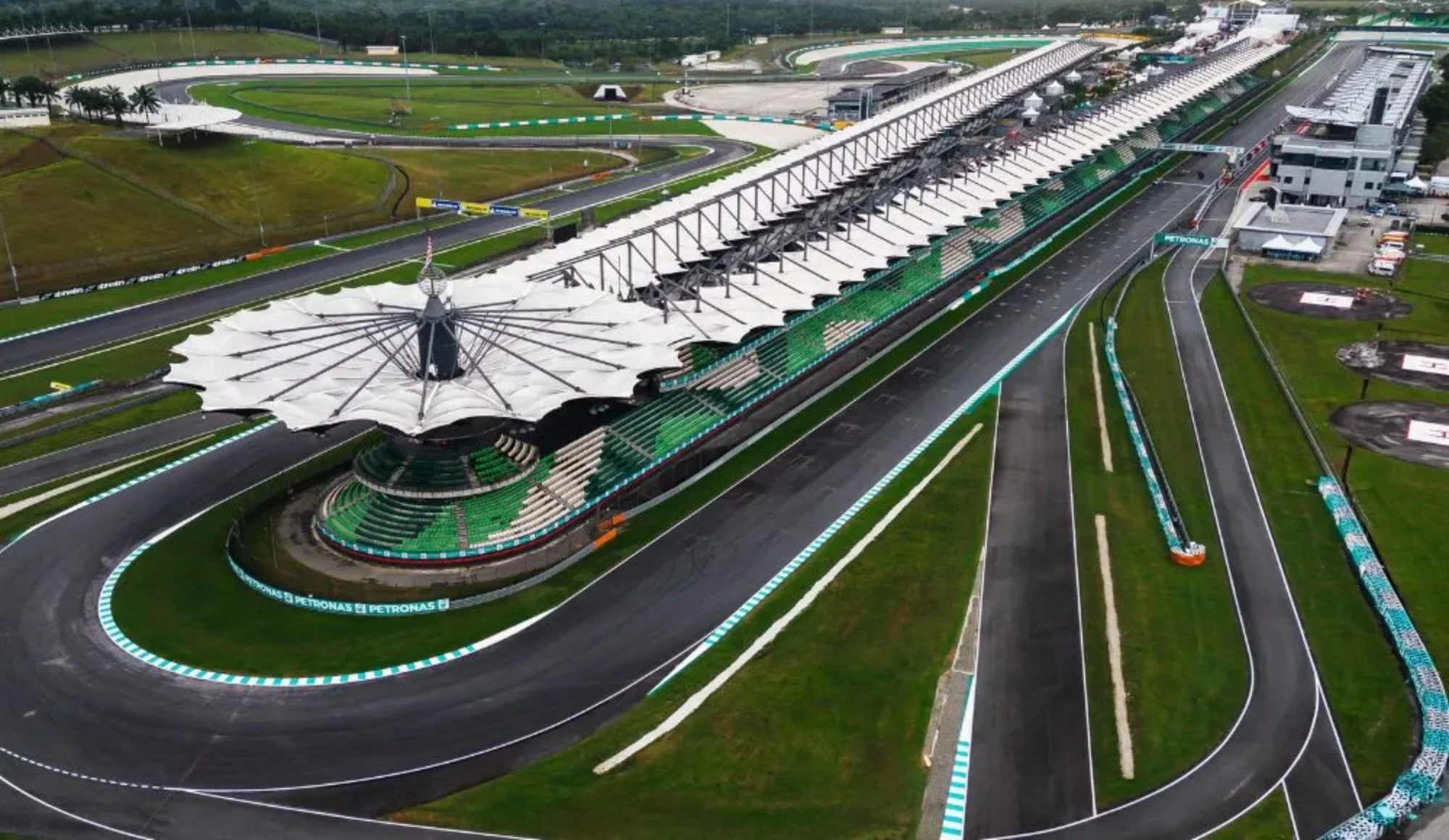
The AFC has already built the track, bought the car, fuelled it up, and left the instruction manual on the passenger seat. The new leadership is currently under a strict two-year reform watch, required to submit quarterly progress reports to Asia’s governing body.
The incoming president’s only job is to sit in the chair, keep their hands on the steering wheel, follow the ninety-four articles of the new statute, and not drive the entire apparatus into a ditch. If they can manage to just do their job, check the boxes, and let the professional clubs run the professional league, the bar will naturally lift off the floor.
It is, quite frankly, the easiest opportunity to become a national hero in the history of sports administration. And how hard can that possibly be?