I have a theory about modern life. It is that we are all being slowly, deliberately, and systematica...

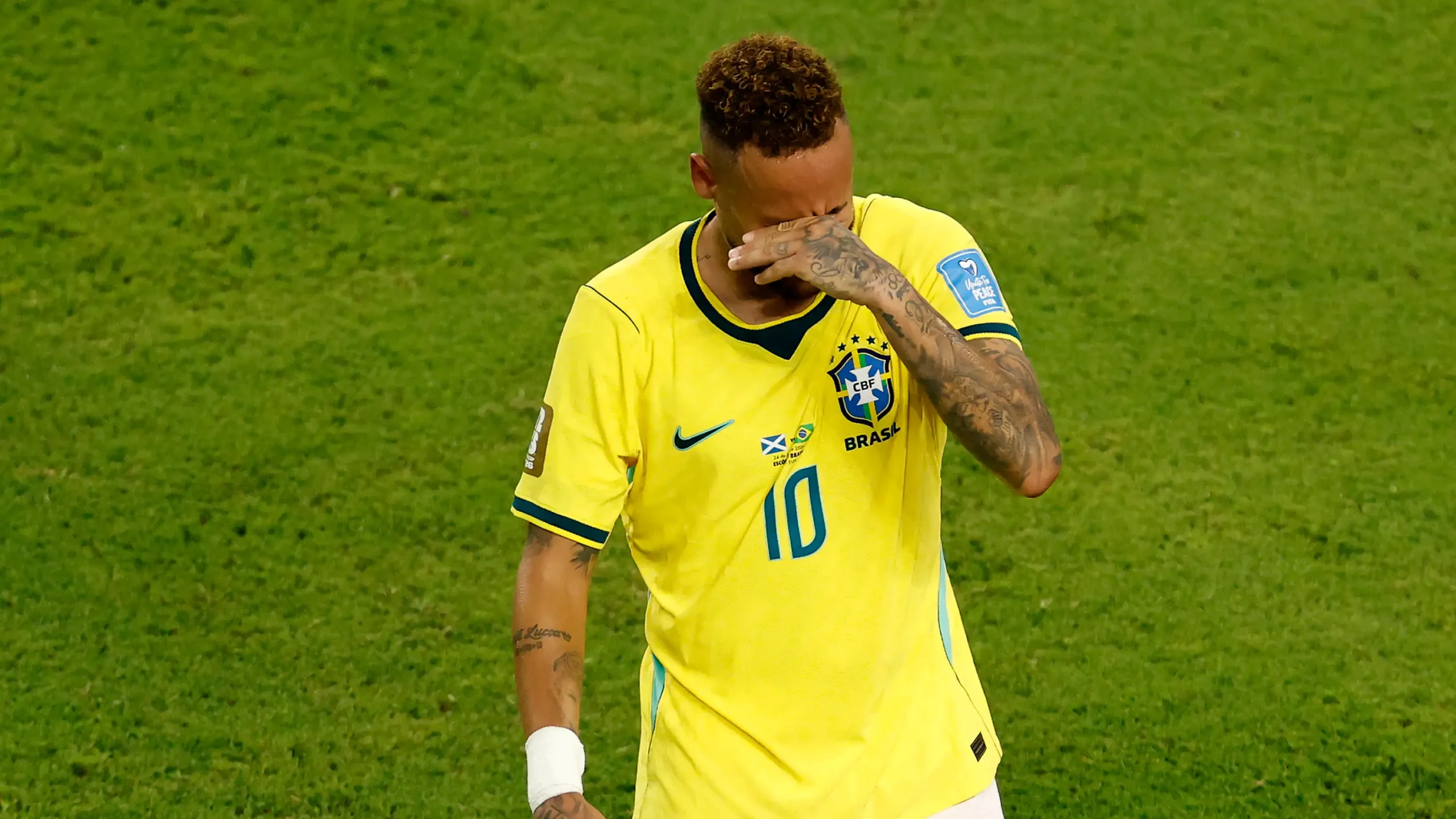
There was a time when the yellow shirt of Brazil did not merely walk onto a football pitch; it floated. It swaggered. To watch the Seleção in the twentieth century was to witness a glorious, borderline offensive display of collective arrogance. It was joga bonito—a football born of sun-drenched beaches, samba rhythms, and a fundamental disdain for the laws of physics. Players did not pass the ball; they flirted with it. They did not score goals; they executed works of performance art that left European defenders looking like bewildered statues outside a museum. The yellow jersey was a carnival on grass, a kinetic explosion of pure, unadulterated human joy.
Look at them now. Turn on your television during this World Cup, and what you see is a tragedy wrapped in a farce. The current Brazilian national team looks less like a carnival and more like a highly compliant delegation of mid-level corporate accountants. Under the stony, aristocratic gaze of Carlo Ancelotti, the joy has been systematically extracted, bottled, and replaced with a rigid, joyless fluid. The yellow shirt, once a textile manifestation of national ecstasy, has been downgraded into a corporate compliance uniform.
The players move with the stiff, anxious precision of men who are terrified that if they try a step-over, they will receive a sternly worded email from HR the following morning. The legendary arrogance is gone, replaced by a collective neurosis. They are no longer playing football; they are executing a three-and-a-half-year strategic business plan. It is soul-crushingly, staggeringly, mind-numbingly boring.
Naturally, the media is baying for Ancelotti’s head. They point at his famously expressive eyebrow and accuse him of importing a stale, European bureaucratic frost into the spiritual home of creativity. But that is lazy journalism. It is the sort of superficial nonsense written by people who think a spreadsheet is a form of literature. Ancelotti is not the villain of this piece; he is merely the master chef who has been handed a basket of pre-processed, vacuum-packed ingredients.
The real culprit is the predatory, globalised pipeline of modern football capitalism. The tragedy begins not in Rio, but in the sterile boardroom offices of European mega-clubs. These massive financial institutions now scout Brazilian prodigies when they are barely old enough to shave. They buy a sixteen-year-old boy who has spent his life learning how to manipulate a football in the tight, chaotic confines of a favela alleyway, and they immediately ship him off to a hyper-sanitised academy in London, Madrid, or Munich.
Once there, the kid is subjected to what can only be described as Tactical Re-Education. Academy coaches, armed with clipboards and an arsenal of terrifyingly dull data metrics, look at a boy who can beat five players with a flick of his heel and see only a liability. They see an error percentage waiting to happen.
They spend the next five years beating the creativity out of him. They lecture him on “low-probability transitions” and “spatial optimisation.” If he tries to show a bit of flair, he is benched and treated like a criminal. By the time he is twenty-one, the street-smart artist is dead. In his place stands a predictable, risk-averse, highly athletic cog. He has been successfully trained to pass the ball sideways, five yards at a time, until the heat death of the universe.
This is not an isolated Brazilian tragedy. This is a global pandemic of mediocrity. We are currently enduring the total “Pep-ification” of international football, a phenomenon where the entire sport has been flattened into a single, suffocating monoculture.
Think back to the World Cups of 1994 or 2002. Those tournaments were magnificent, chaotic clashes of civilisations. You had the operatic, defensive cynicism of the Italians colliding with the joyous, irresponsible anarchy of the South Americans. The Germans brought a relentless, industrial power, while the Nigerians arrived with an explosive, athletic unpredictability. Every match was a cultural argument settled on grass. It was spectacular.
Today, however, the tournament has the cultural variety of an airport departure lounge. Thanks to the universal adoption of European tactical software, all thirty-two teams are running the exact same system. It is a copy-pasted, bureaucratic blueprint where everyone builds from the back with the same tedious geometry, everyone uses inverted wingers, and everyone occupies the exact same “half-spaces.”
The unique cultural identity of a footballing nation has been tossed into the incinerator. Whether you are watching Belgium, South Korea, or Brazil, you are watching the exact same match played by different men in different coloured shirts. We have traded the laboratory of human genius for a globalised monopoly of standardised, risk-averse mediocrity.
Which brings us, with a sense of mounting dread, to the upcoming Round of 32 clash in Houston. Brazil is scheduled to face Japan, and I am here to tell you that this is Brazil’s ultimate, inescapable nightmare.
You see, if you decide to play the game of rigid, textbook European efficiency, you have to be prepared for the fact that the Japanese have read the textbook, memorised it, and perfected the software. While Brazil is trapped in an identity crisis—halfway between their historical urge to dance and their new corporate instructions—Japan has no such hesitation. They are a terrifyingly synchronised, hyper-disciplined machine.
Ancelotti’s Brazil relies on a stiff, robotic midfield structure designed to control possession through predictable passing lanes. Japan will look at that structure and lick their lips. Under the Texas heat, the Japanese press will not just challenge Brazil; it will systematically choke them. They will hunt in packs, closing down those sterile passing lanes with a relentless, terrifying intensity.
When a player who has been coached to rely entirely on a tactical script is suddenly pressed by three opponents simultaneously, panic sets in. Deprived of their creative instincts by years of European academy conditioning, the Brazilian players will look like lost tourists who have had their smartphones stolen. They will make catastrophic, mechanical errors. They will pass the ball directly to Japanese forwards, and Japan will punish them with surgical, bloodless efficiency. It will not be a football match; it will be a software crash on a massive scale.
If Brazil wants to survive the Houston nightmare, they cannot do it by trying to be more disciplined than Japan. You cannot beat a machine by trying to be a slightly better machine. The textbooks are entirely useless now.
To stay alive, someone in that yellow shirt needs to commit an act of violent, beautiful, and deeply illogical artistic rebellion. Someone needs to look at the bench, ignore Ancelotti’s frantic hand gestures, erase the data metrics from their brain, and do something completely mad. They need to attempt a trick that makes no statistical sense. They need to invoke the ghosts of Garrincha and Ronaldinho—men who played the game not to optimise an asset, but to make the stadium gasp.
But let us be realistic. They probably won’t. The corporate conditioning runs too deep, and the fear of the spreadsheet is too great. Even if Brazil somehow scrambles through, even if they scrape a 1-0 victory via a deflected corner and an afternoon of agonising defensive solidity, we must ask ourselves: what is the point?
When you have successfully sanitised the soul out of the world’s most beautiful team to win a trophy, you haven’t actually won anything at all. You have simply conducted a successful corporate audit. And frankly, I would rather watch a carnival burn to the ground than watch a group of millionaires celebrate a successful balance sheet.