I have a theory about modern life. It is that we are all being slowly, deliberately, and systematica...

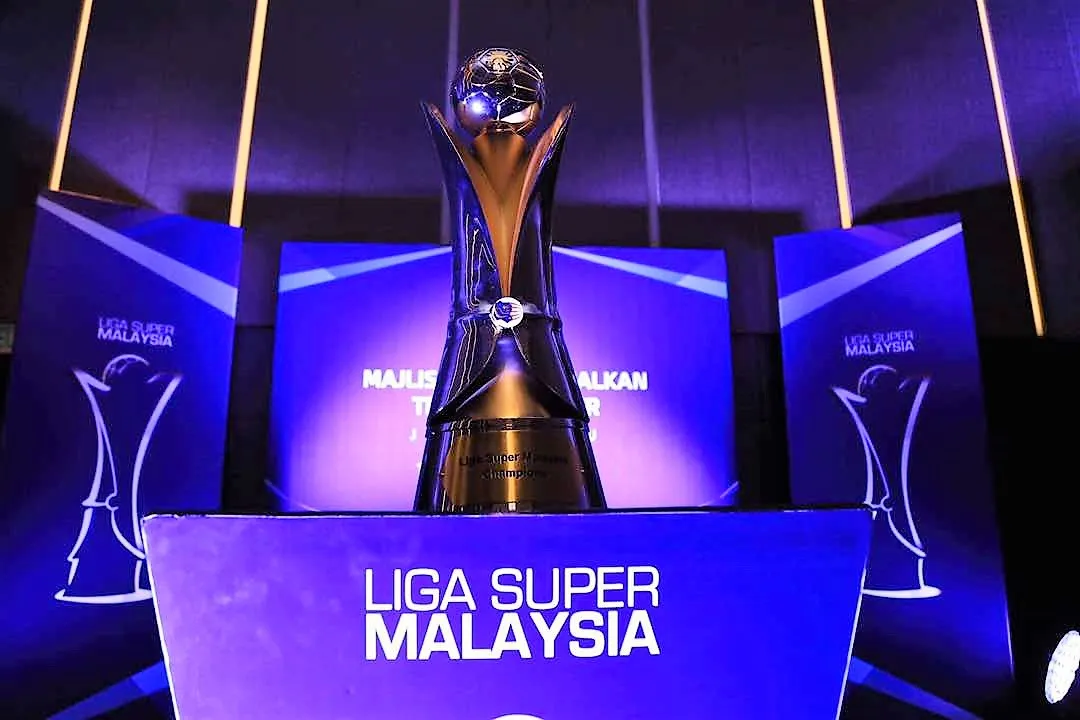
The Malaysian Football League (MFL) has announced that the 2026/27 Super League season will return to a 12-team format after last season’s competition featured an odd number of clubs, with 13 teams taking part.
The decision brings the league back to a more conventional structure after supporters had to endure a season in which one club was forced to sit out every matchweek due to the uneven number of participants.
Although MFL did not take the opportunity to expand the league to 14 or 16 teams, the return to a 12-club format presents an opportunity for the league organisers to rethink how Malaysia’s top-flight competition is structured.
Now that the Super League has aligned itself with the international football calendar by running from August to May, in line with the Asian Football Confederation’s (AFC) recommendations, perhaps it is time for MFL to adopt another European-inspired approach—this time by increasing the number of league fixtures.
Following Scotland’s Model
One format that MFL could consider to increase the number of Super League matches, rather than limiting the season to just 22 league fixtures, is to adopt a system similar to the one used in Scotland.
Scotland’s top division, the Scottish Premiership, also consists of 12 clubs—the same number as Malaysia. Despite that, each club still plays 38 league matches across the August-to-May calendar, matching the number of games played in 20-team leagues such as the English Premier League and Spain’s LaLiga.
So, how do they achieve that?
The answer is simple. All 12 clubs play each other three times during the first phase of the season, giving every team a total of 33 league matches. The question then becomes: where do the remaining five matches come from?
The solution lies in the split system.
After 33 matches, the league is divided into two groups. The top six clubs compete against one another, while the bottom six do the same. Each club then plays five additional matches within its respective group, bringing the total to 38 league fixtures.
In Scotland, the top six teams enter what is known as the Championship Group, where they battle for the league title and qualification for European competitions. In Malaysia’s context, this would determine qualification for Asian club competitions.
Meanwhile, the bottom six clubs compete in the Relegation Group, where the focus is on avoiding relegation to the second division. However, since Malaysian football currently does not have direct promotion and relegation with a fully operational second tier, the bottom-six group would instead be centred on determining which club finishes at the foot of the table.
A Financial Boost for Clubs
Expanding the league to 38 matches would undoubtedly provide clubs with more opportunities to generate revenue. The equation is straightforward: more matches mean more opportunities to earn income through ticket sales, matchday experiences and official merchandise.
In turn, this could help clubs reduce the financial difficulties that have frequently resulted in unpaid player wages. It is far from ideal when the league schedule regularly features gaps of two or even three weeks between matches, as has been the case in recent seasons. This does not even take into account additional breaks to accommodate the national team’s fixtures outside FIFA’s official international match calendar.
That said, this format is not without its drawbacks.
Clubs would face the same opponents three or even four times in a single season, making the competition feel repetitive. If those teams also meet in the FA Cup or the Malaysia Cup, supporters could end up watching the same fixtures multiple times, potentially leading to fan fatigue.
Furthermore, given that the current league still lacks genuine competitiveness in the title race, some supporters may feel that a 38-match season is unnecessarily long and exhausting, particularly if the champions are effectively decided well before the campaign reaches its conclusion.
Nevertheless, MFL should continue exploring ways to make the Super League more competitive while giving players more opportunities to play, allowing clubs to utilise the full depth of their squads. If Scotland’s model is not the right fit, there are still other league formats that could be considered.