The 2026 Liga Wanita Nasional (LWN) season has officially come to an end two weeks ago, with Borneo ...

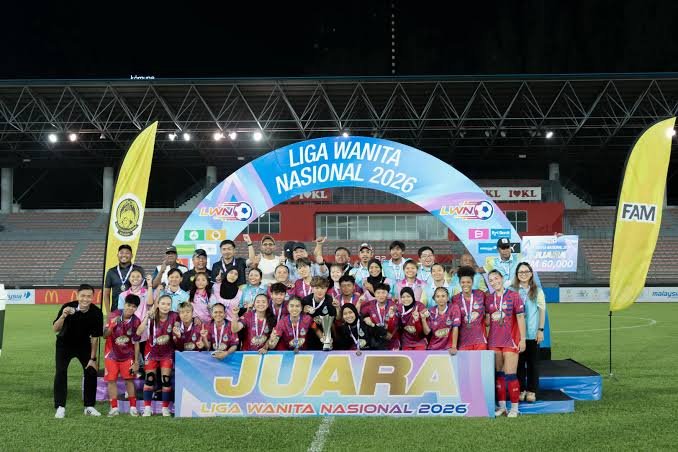
The 2026 Liga Wanita Nasional (LWN) season has officially come to an end two weeks ago, with Borneo giants Sabah living up to expectations and their status as favourites by defeating their closest challengers, Selangor, to claim the title.
A 1-0 victory, courtesy of a goal from Enzi Broussard, allowed Sabah to retain their LWN crown and secure their place as Malaysia’s representative in an upcoming Asian competition.
Meanwhile, Selangor had to settle for the runners-up spot, although their Mexican striker, Julissa Cisneros, had something to celebrate after being crowned the league’s top scorer with 20 goals.
Another LWN season has come to an end. The question now is: what’s next for women’s football in Malaysia?
It is no secret that women’s football in Malaysia is still operating on a relatively small scale. However, the sport is gradually moving in the right direction, with efforts being made to develop and strengthen its foundations.
In this social media era, reaching target audiences through content creation can help raise the profile of women’s football in Malaysia at a much faster pace. The national women’s team recently experienced a surge in attention following their impressive performances in the AFC U-17 Women’s Asian Cup qualifiers, despite ultimately falling short of securing a place in the final tournament.
That surge in attention could be capitalised on by league organisers to attract more supporters to stadiums and encourage them to get behind the women’s teams competing in the country.
With the league still in its early stages of development, there are plenty of opportunities for organisers to explore in expanding the national women’s football competition, while increasing the number of matches and improving the overall quality of the tournament.
One possibility would be to explore expanding the number of participating teams by inviting clubs from outside Malaysia. Perhaps the organisers could consider inviting women’s teams from Singapore or Brunei to increase the number of participants, provide more competitive fixtures and give players greater opportunities to accumulate valuable playing minutes.
Bringing in foreign teams could also generate greater publicity for the league, allowing the LWN to attract attention from a wider audience, not just within Malaysia but also across national borders.
Beyond that, support from our own people is equally important in taking the LWN forward. To be clear, the writer is not referring to men, who are traditionally associated with football, but rather the women in our society.
Across the world, efforts to develop women’s football have always faced challenges, particularly due to the stigma surrounding a sport that is often associated with men. Remarks such as “women don’t play football” and “a woman’s place is in the kitchen” are still thrown around by certain individuals who believe that women should not be playing the game, let alone scoring goals.
This situation was further compounded by a period when femininity seemed to take a back seat in the women’s game, with men’s-style fashion and appearances often being adopted. Today, however, feminine elements are becoming increasingly visible among the country’s female footballers.
In developing women’s football, there is perhaps no greater source of support than the women themselves. We can certainly hope that men will come forward to show their support, but wholehearted backing from women is essential to elevating the women’s game. If not them, then who?
The 2026 LWN season has concluded successfully, and hopefully, next season will be even more exciting and attract greater attention from sports fans across the country. As someone who was involved in the competition as a commentator, the writer can see the potential that exists. However, realising that potential will require unwavering support from all parties.
Women’s football is like a canvas that already has its patterns, yet still has plenty of room for more to be added. There is still time to improve the game in Malaysia and eventually establish the women’s league as one of the best in Asia. Ultimately, the biggest beneficiaries of these efforts will be our very own Malayan Tigress.