I have a theory about modern life. It is that we are all being slowly, deliberately, and systematica...

The current “brouhaha” in Malaysian football—the frantic X threads, the crying for “structural reform,” the club CEOs acting like they’ve just discovered the concept of a budget—is not a crisis of leadership. It’s a crisis of character. We are watching a patient on the operating table slapping the hand of the surgeon because the medicine tastes like accountability instead of the usual sugary hit of a state subsidy.
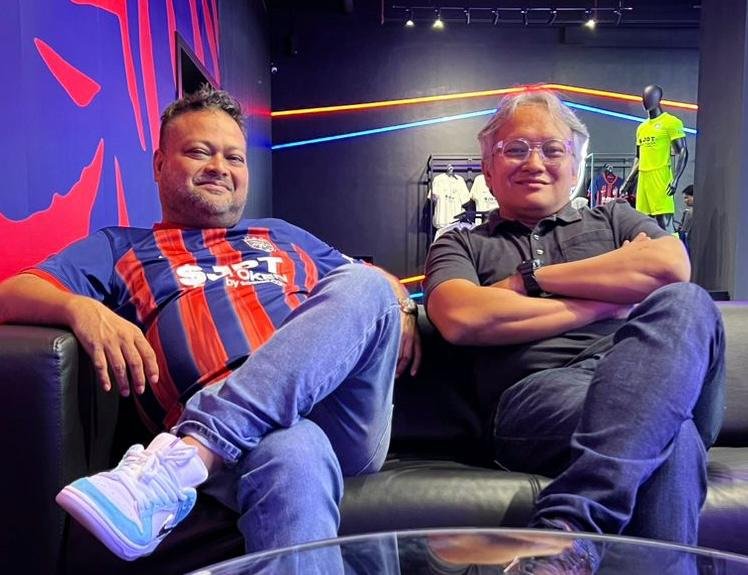
Enter Kevin Ramalingam: the man who brought a scalpel to a knife fight. For the better part of a decade, Kevin has been the Corporate Surgeon attempting to perform a bypass on a heart clogged with the cholesterol of government handouts. And now, the “patient”—that collection of subsidy-addicted clubs and their vocal, often confused, fanbases—is claiming the surgeon is the one who made them sick.
In 2012, Kevin proved that the patient could breathe on its own. Taking The Red Warriors—a club in a state where corporate sponsors usually stop at the local kedai runcit—and turning them into a self-sustaining, treble-winning commercial powerhouse was the ultimate proof of concept. It was a slap in the face to every “bigwig” sitting in a state FA office. He showed that if you treat a club like a brand rather than a political footstool, the money follows. But instead of learning the lesson, the rest of the league looked at Kelantan’s success and waited for someone to give them the same results without doing the actual work.
Then came the Privatisation Boogeyman. Let’s address the historical revisionism currently rotting on social media. The privatisation of the M-League wasn’t some vanity project Kevin cooked up in a fever dream. It was a cold, hard AFC mandate. The Asian Football Confederation looked at our “professional” league—which was essentially a series of government departments in football boots—and issued an ultimatum: Privatise or get barred from Asia. Kevin’s role at the FMLLP was to design the recovery ward. He introduced the Stakeholder Model, a constitution meant to turn clubs into shareholders of their own destiny. It was a diplomatic peace treaty designed to end the era of the “begging bowl.” The critics on X now scream that this was “untimely” or “ruined the league.” It’s an adorable delusion. You don’t tell a surgeon that a life-saving amputation is “untimely” just because you’re fond of your gangrenous leg. The league wasn’t “ruined” by privatisation; it was exposed by it. Kevin didn’t break the system; he just turned the lights on and showed everyone that the “patient” had been dead since the 90s, kept alive only by the artificial respiration of taxpayer money.
Today, the Surgeon is at JDT, polishing a Gold Standard that makes the rest of the league look like a Sunday morning kick-about at the local padang. While other clubs are begging for “structural reform,” JDT is signing deals with Nike and Hublot. The gap isn’t just financial; it’s intellectual. JDT followed the blueprint. The rest of the league treated the blueprint like a suggestion they could ignore as long as they kept sucking on the state straw. Now that the straw is dry, they want to blame the guy who told them to start digging a well ten years ago.
The inconvenient truth is that this sudden urge to “reset the system” is a shimmering oasis of hope in a desert of our own making. We are witnessing a masterclass in bureaucratic theatre, where the M-League’s structural integrity is being blamed for what is, quite clearly, a chronic, systemic case of operational incompetence. It is far easier to demand a new constitution than it is to balance a chequebook, and that is the fundamental grift being sold to the public today. We’ve traded the mahogany tables of boardroom diplomacy for the shallow vanity of “TikTok Diplomacy,” where CEOs would rather go viral on a podcast or post a cryptic Instagram story than submit a coherent, evidence-based licensing appeal.
This current demand for “structural reform” is a sovereignty gambit—a clever sleight of hand to divert righteous indignation away from empty bank accounts and toward the league’s headquarters. It’s a retreat dressed up in the language of revolution. If you can’t meet the licensing requirements, don’t improve your accounting; just demand the requirements be changed in the name of “flexibility.” It is the ultimate Malaysian shortcut, the “cable” mentality applied to sport. We are at a crossroads where we might actually tear down a functional structure because a few loud voices don’t like the rules.
Malaysian football doesn’t need more influencers; it needs more executives. It needs the adults in the room (the shareholders) to stop acting like they are auditioning for a reality TV show and start acting like they are running a multi-million ringgit industry. Any roundtable regarding the future of the league must begin with a mirror. If the clubs do not fix their internal financial discipline, no amount of structural tinkering at the league level will save them. You can change the engine of a car every week, but if the driver refuses to use the steering wheel and keeps pouring teh tarik into the fuel tank, you are still going to end up in the ditch.
Kevin Ramalingam isn’t the reason the league is “ruined.” He’s just the only one who had the courage to tell the patient it was sick, while the patient was too arrogant to actually manage the cure.