One hundred and fifteen charges were laid. One hundred and fourteen were upheld. I have spent a deca...

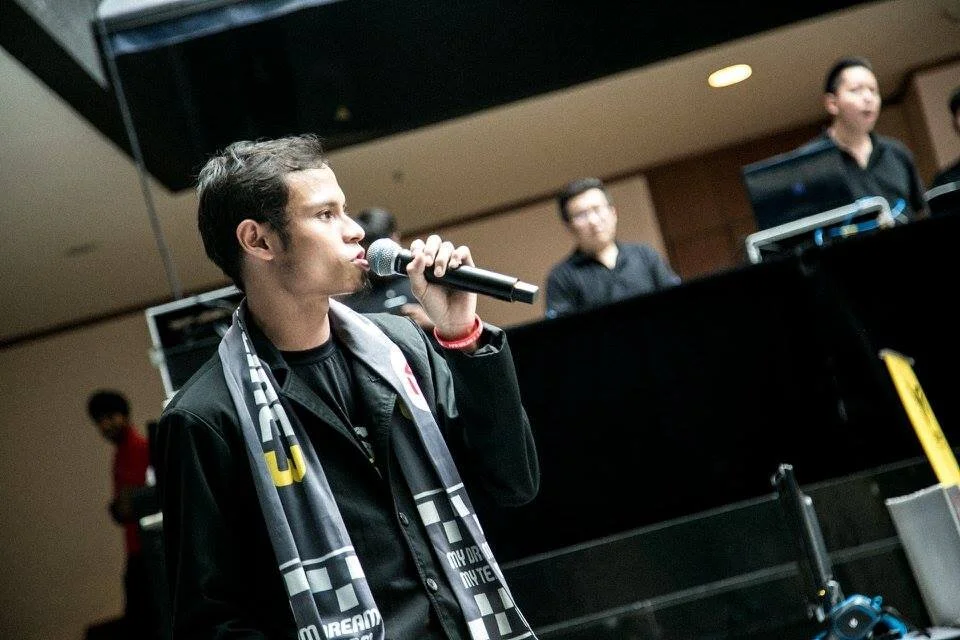
Picture this: a small production room, one camera on a tripod, a laptop running a
shaky live stream, and a young man behind a borrowed microphone trying to
describe what he is seeing on the pitch — in real time, for whoever happened to be
watching online. No producer in his ear. No safety net. Just football, a voice, and the
terrifying freedom of a live feed.
That is where some of Malaysia’s best sports broadcasters began.
In 2019, the Football Association of Selangor opened a small but consequential door.
A grassroots initiative brought aspiring commentators into the fold of their live
streaming operations — giving young broadcasters real match time against real
stakes. The stream quality was rough around the edges. The viewership was modest.
But the experience was the real thing: live football, live pressure, live feedback. No
simulations. No classroom. Just the match, the mic, and the work.
Four names emerged from that environment and kept going. Aiman Roshizam and
Wan Khairil Azwa eventually made their way to Astro Sports. Firdaus Musa and
Ruzaidi Tamezi found their footing at RTM Sports. All four are now credible,
recognised voices in Malaysian sports broadcasting — figures who understand the
game not just technically but emotionally, who know the rhythms of Malaysian
football because they came up through them.
What is less visible is how that pedigree was built — and why it matters now more
than ever.
Recently, Konami — the Japanese gaming giant behind eFootball — formalised a
partnership with the Malaysian Football League, bringing Liga Super Malaysia clubs
into the game. It was a moment of quiet pride for local football fans, who could
suddenly pick up a controller and play as their favourite domestic sides in a globally
recognised title.
But the conversation that followed was the more interesting part of the story. Fans
and observers began asking: if Malaysian football is now in the game, shouldn’t
Malaysian voices be in it too? The question gained enough traction that Konami’s
General Producer, Junichi Taya, acknowledged it directly — noting that the
possibility of including Malaysian commentators was something the company was
watching with genuine interest.
The names that surfaced in that discussion were not chosen at random. Wan Khairil
Azwa. Aiman Roshizam. Firdaus Musa. These are broadcasters whose voices fans
have grown up with — figures who have earned recognition not just for technical
competence but for feel. For the way they make Malaysian football sound like it
matters.
That kind of broadcaster does not arrive fully formed. They are built slowly, through
repetition and exposure and failure and recovery — and critically, through someone
deciding to give them a platform before they were polished enough to deserve one.
This is the quiet function of grassroots programs in sports broadcasting: they
compress the gap between dreaming about a career and actually doing the work.
Formal media training has its place. But no classroom replicates the moment when
the match kicks off, the mic is live, and you are the only person standing between the
viewer and silence. That experience — uncomfortable, unpolished, occasionally
humbling — is what accelerates development in ways that structured courses rarely
can.
These programs also produce something else that formal training cannot: a body of
work. A reference. Evidence that the talent exists and can deliver under pressure.
That evidence is what opens doors at Astro. At RTM. And apparently, at the offices of
a Japanese gaming company, they are deciding whose voice should narrate
Malaysian football for a global audience.
That is not a coincidence. That is what a pipeline looks like.
The Konami moment is symbolic in ways that extend well beyond gaming. It signals
that Malaysian sports broadcasting talent has reached a level of cultural recognition
that crosses into global commercial conversations. But that recognition rests on a
foundation built quietly at the grassroots level, long before any spotlight arrived.
The lesson for Malaysian football — and Malaysian sport more broadly — is this: if
we want more voices like these, we need more programs like the ones that shaped
them. Not just in Selangor, but across every state. Not just for commentators, but for
analysts, producers, and the full ecosystem of sports media talent that a maturing
football nation actually needs.
The broadcasters now being named in the context of an international gaming deal
did not get there by accident. They got there because someone gave them a rough
room, a borrowed microphone, and a live match — and trusted them to figure out the
rest.
Talent is everywhere. What it needs is a ramp. We should be building more of them.
Deliberately. Consistently. And at every level of the game.