I have a theory about modern life. It is that we are all being slowly, deliberately, and systematica...

The air in Kuala Lumpur doesn’t just sit; it conspires. It’s a thick, humid soup of exhaust fumes and impending tropical rain that clings to your skin like a bad debt. On a patch of grass that has seen better centuries—more mud than turf, really—a pack of teenagers is currently defying the laws of physics. There are no manicured lawns here, no isotonic drinks curated by scientists in lab coats, and certainly no billionaire owners watching from air-conditioned glass boxes. This is the raw, unpolished heart of Malaysian football. It’s a cacophony of shouting, the rhythmic thwack of a worn-out ball against bone, and the smell of wet earth. Contrast this with the sterile, hyper-monetized academies of Europe, where talent is farmed like GMO corn in climate-controlled environments. In those gilded cages, football is a business transaction. Here, on the grass, it’s an escape pod.
For too long, the “beautiful game” has been hijacked by the “suits.” The traditional football pipeline is less of a meritocracy and more of a gated community. We’ve built a global system of “pay-to-play” barriers that ensure only the kids with the right zip codes and the deepest pockets get a look-in. It’s a bureaucratic theatre designed to keep the world-class talent hidden in the shadows of the projek perumahan rakyat (PPR) flats, while the mediocre sons of the elite get the scouting trials. If you don’t have the kit, the fees, or the connections, you’re invisible. The scouts don’t come to the mud-patches; they go where the catering is better. It’s a colossal insult to the intelligence of the sport—a systemic failure that treats the next global superstar like a rounding error on a balance sheet.
Enter the disruptor. You’d expect a “Golden Ticket” to come from a flashy sportswear brand or a Gulf state looking to scrub its image. Instead, the lifeline comes from a Swedish ball-bearing giant. Since 2007, SKF has been running the “Meet the World” initiative in Malaysia, and they’ve been doing it with a quiet, persistent aggression that puts the local football associations to shame. They aren’t just another “boring corporate sponsor” slapping a logo on a jersey for a tax write-off. They are the ones providing the bolt cutters for the gates. By hosting these qualifiers, SKF targets the community-based underdogs—the teams like Destiny Eagles FC—rather than the pampered elite academies.
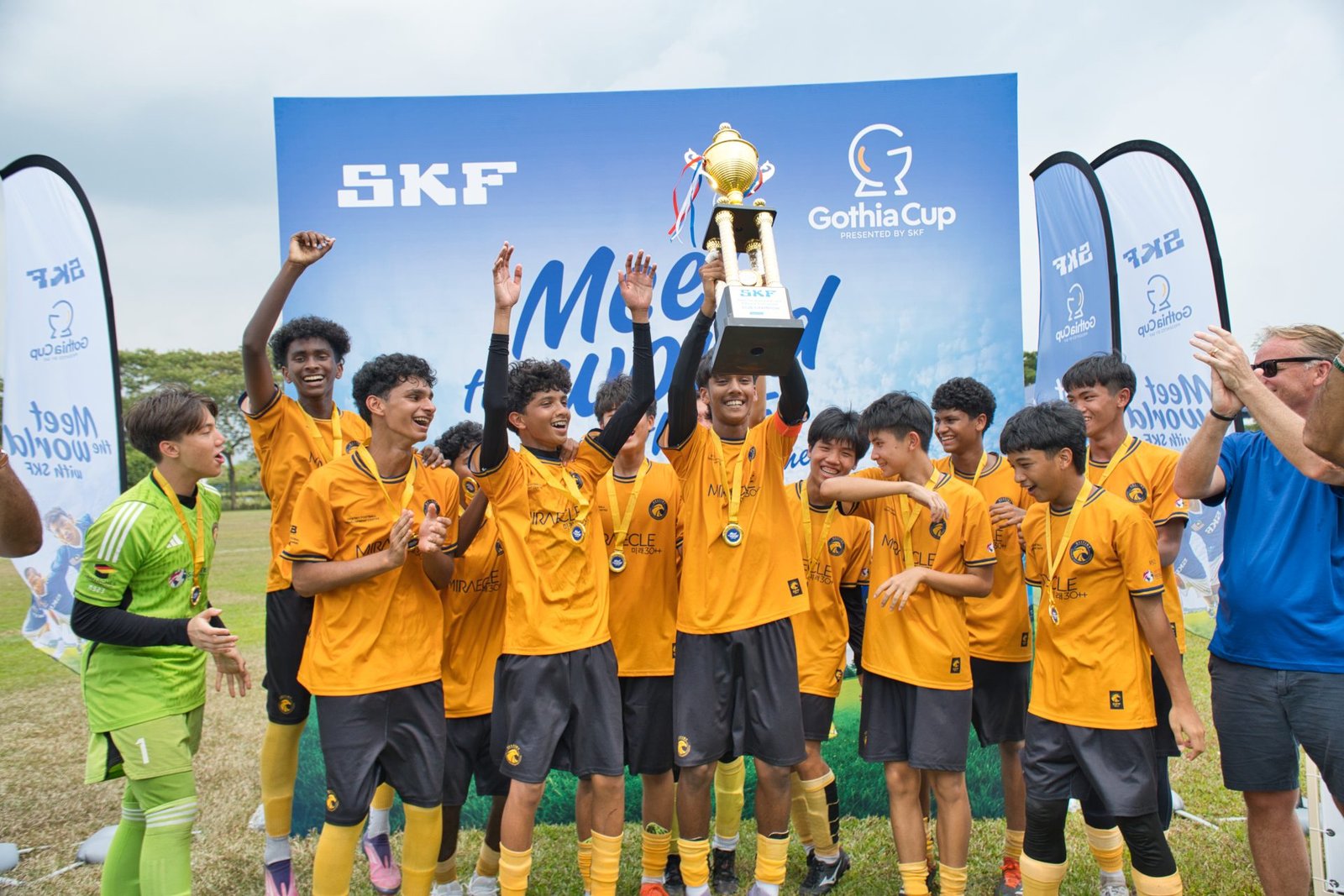
Just this past week, in the blistering April heat of 2026, the Under-16 squad of Destiny Eagles clinched their winning entry to the Gothia Cup. Led by captain Gautham Raj and head coach Walid Mohamed Saber Younis, these boys didn’t just win a trophy; they secured a passage to Gothenburg this July. For the uninitiated, the Gothia Cup is the “Woodstock of Football.” It’s a sprawling, chaotic, glorious assembly where 1,700 teams from 80 nations descend upon a single city to see who has the most heart. It is the one place where a kid from a Malaysian village can look a German prodigy in the eye and realize the ball doesn’t care about his bank account.
This isn’t just a tournament for the hopeful; it’s a rite of passage for the legendary. This is the same grass where a young Zlatan Ibrahimović first showcased the arrogant brilliance that would eventually conquer Europe. It’s where Andrea Pirlo, the architect of the midfield, once orchestrated play as a teenager with US Voluntas. These weren’t always “brands”; they were once just kids on a pitch, proving that talent is a universal currency. When you take a team like the Destiny Eagles and drop them into the roar of the Ullevi Stadium, you aren’t just playing a game; you’re performing a psychological heist. For these kids, the flight to Gothenburg is often their first time leaving the state, let alone the continent. They aren’t just carrying a ball; they’re carrying the hopes of a neighborhood that the “bigwigs” usually ignore.
The “social initiative” label is often a polite term for charity, but this is different. This is a crash course in global citizenship. When these Malaysian underdogs step onto the pitch in Sweden, the “sovereignty gambit” changes. They realize they aren’t “less than.” They learn that their grit, honed on the uneven clay of home, is a currency that trades well in any market. Let’s be real: not every kid who goes to Gothenburg is going to sign a pro contract in the Premier League. Most won’t. But that’s not the point, and anyone who tells you otherwise is selling you a different kind of snake oil. The real victory is the middle finger this initiative flips to the status quo.
These kids return to Malaysia with a “global citizen” mindset. They’ve seen the world, they’ve competed with the best, and they’ve realized that the world is much smaller—and much more accessible—than the “suits” wanted them to believe. They bring back a confidence that is infectious. That’s the real “social win”—creating a generation that refuses to stay in the boxes built for them. Talent is a universal constant, scattered blindly across the planet by some cosmic lottery. But opportunity? Opportunity is a gated community guarded by gatekeepers who love nothing more than a high fence. SKF isn’t just sponsoring a tournament; they’re the ones kicking the gates down and inviting the “beautiful losers” to crash the party. It turns out, when you give the underdogs a level playing field, they don’t just play the game—they rewrite the entire script. The elite might own the stadiums, but the grass still belongs to the dreamers.