One hundred and fifteen charges were laid. One hundred and fourteen were upheld. I have spent a deca...

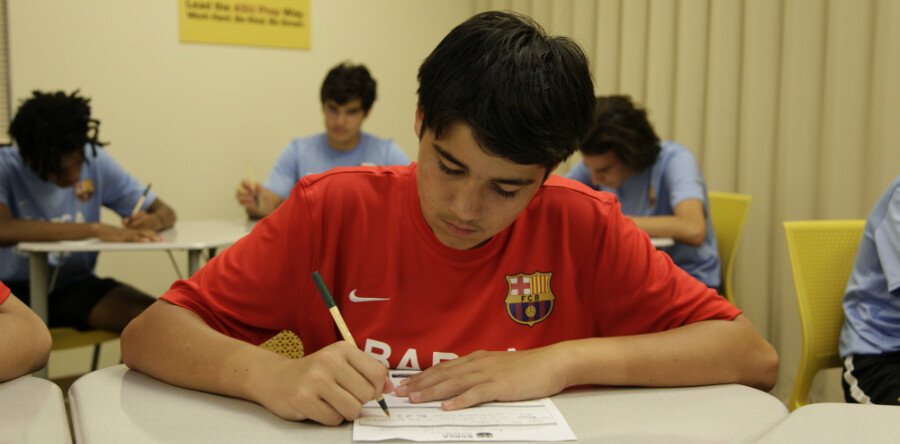
In football, education is often misunderstood as something that happens only in formal courses or structured coaching modules. In reality, education begins much earlier and much closer than that. It starts in the small conversations that take place every day such as messages in parents’ WhatsApp groups, brief exchanges between coaches and players after training or spontaneous discussions at the side of the pitch. These are the spaces where values, understanding and football culture begin to form before they grow into a larger ecosystem.
The main challenge in community football today is perception. Many still view football only through the outcome on the pitch. Winning or losing becomes the primary measure of success, as if that alone defines the worth of a club. Yet modern football operates on a much broader foundation of knowledge such as management, coaching, communication, psychology, sports economics and community governance. Without an understanding of these elements, the journey of a community club becomes difficult to grow in an organised and sustainable way.
One of the growing challenges is the level of awareness surrounding the cooperative model. Some still do not understand its role and some view it through personal perceptions of individuals associated with the club. A cooperative is not about individuals. It is a platform of unity that brings together supporters, parents, coaches and the wider community to build something larger than any one person. A cooperative elevates the value of collective responsibility rather than personality.
We often forget that a cooperative is not merely a financial entity. It is a learning space. It is where the community understands how a club is managed, how decisions are made, how budgets are allocated and how football can become a catalyst for local economic activity. Through the cooperative, the community learns that every contribution, no matter how small, has a meaningful impact on the club. It teaches that ownership is not only about shares but about responsibility.
Through activities such as merchandise sales, community programmes or academy development, the cooperative becomes a practical space to learn about the real world of football. Every member is not only a supporter but also a student of the system. They learn organisational discipline, honesty in managing funds, transparency in decision making and the value of collective responsibility which forms the foundation of any club that hopes to endure. This kind of education does not come from textbooks but from lived experience.
We must also understand an important principle which is that club ownership cannot come before understanding. Before a club can be owned by the community, the community must first understand what ownership truly means. Ownership without knowledge creates confusion. Ownership without understanding becomes a burden to the club. This is where the cooperative plays a vital role because it teaches supporters that a football cooperative is not a place for quick returns but a social investment for a shared future. Every ringgit, every membership and every volunteer hour is a sign of commitment to something greater than oneself.
Through the cooperative, education does not stop at the pitch. It expands into understanding club economics, organisational structure, member roles and shared responsibility in building a healthy ecosystem. It teaches that football is not only about the ninety minutes of a match but the hundreds of hours of work behind the scenes. It teaches that a club’s success does not belong only to the players but to everyone involved in its journey.
Change of this nature does not happen overnight. It does not happen because of one meeting or one announcement. It happens through one conversation, one session and one action at a time. It happens when parents begin to understand their role. It happens when supporters begin to see themselves as custodians. It happens when coaches begin to see education as part of their duty. And it happens when the community begins to believe that football can be a learning space that shapes people rather than only athletes.
This edition invites us to see education and professionalism as the foundation of community football culture. Without education, we repeat the same mistakes. Without professionalism, we move according to emotion. When both are combined, we build an ecosystem that can survive, grow and benefit the next generation.
This cultural shift through education and professionalism leads us to a larger question which is what comes next for the community. After understanding the system, the values and the responsibilities, the time has come to see supporters not only as observers but as owners of football’s future. This is where a new journey begins, a journey that transforms the relationship between community and club from supporting outside the fence to building from within the structure. This transition is what we will explore in the next episode.