Let’s be honest: the Football Association of Malaysia (FAM) is currently less of a “sporting g...

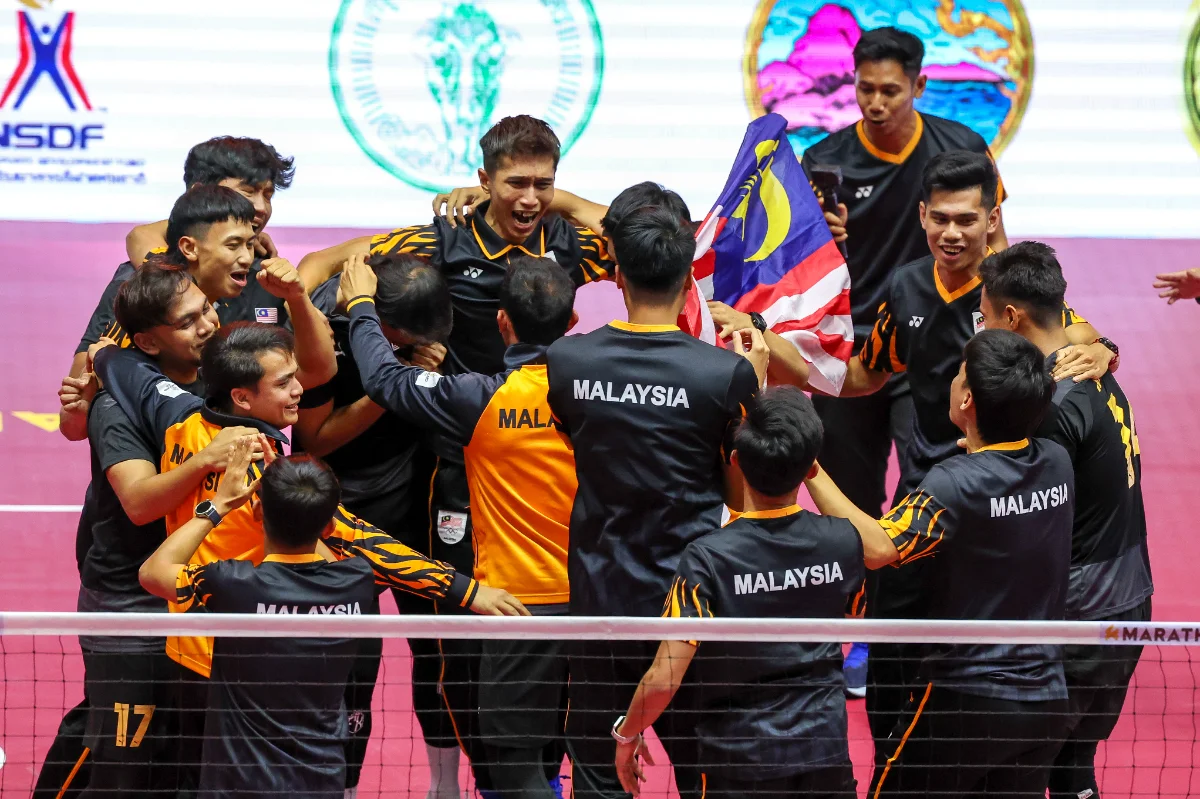
Beating Thailand at Sepak Takraw, inside Thailand, is a bit like trying to out-cook a grandmother in her own kitchen, or attempting to explain the concept of a “queue” to a chaotic swarm of bees. It is, historically speaking, a statistical impossibility. It is the sort of thing that simply does not happen.
And yet, this week, amidst the stifling heat and the deafening roar of a partisan Bangkok crowd, Malaysia didn’t just beat them. We dismantled them. The Men’s Regu team ended a 34-year gold medal drought. Thirty-four years! To put that in perspective, the last time we won this event, the internet was a science fiction concept and I still had a full head of hair.
Then, just to rub salt in the neighbours’ wounds, our Netball Maidens went and thumped Singapore to secure a “Golden Hat-trick.”
Now, the predictable boring people—the ones in blazers who like to use words like “synergy” and “holistic”—will tell you this victory was down to “national spirit” or “tiger-like passion.” What absolute tosh. Passion doesn’t help you return a spike traveling at the speed of a recalcitrant photon.
No, we didn’t win because we prayed harder. We won because, for the first time in history, we decided to stop treating sport like a village fete and started treating it like a business. We won because of the Sepak Takraw League (STL) and the Netball Super League (NSL).
Let me explain, using small words for the bureaucrats in the back.
For decades, the Malaysian strategy for sports development was roughly the same as buying a lottery ticket. We would wait for a “Jaguh Kampung” (village champion) to magically appear from a paddy field, shove a flag in their hand, and hope they didn’t faint when they saw a TV camera. It was a rubbish system. It produced brittle athletes who crumbled faster than a digestive biscuit in a cup of hot tea the moment the pressure ramped up.
Then, someone at the associations, presumably by accident, had a brilliant idea. They partnered with Astro and built proper, professional leagues.
Look at the STL. Before this league existed, our players would train for months in quiet halls, only to meet the Thais once every two years and get absolutely hammered. It was a ritual humiliation. But the STL changed the physics of the universe. We started importing the enemy. We paid top-tier Thai strikers to come play for Malaysian clubs.
This was genius. Suddenly, our local defenders weren’t looking at the Thais as mythological gods of destruction; they were looking at them as “that bloke Somchai who I blocked last Tuesday.” The fear factor evaporated. The STL turned the sport from a cultural dance into a weekly, televised cage fight. By the time our boys walked into the stadium in Thailand this week, they weren’t nervous. They were bored of pressure. They’d been doing it live on Astro Arena every week for years.
The same goes for the Netball Super League. Netball is often viewed as a polite sport where people apologize for bumping into each other. Having watched the NSL, I can tell you this is a lie. It is rugby without the padding. The NSL created a brutal, high-speed ecosystem where you either got fit or you got flattened.
When our captain got injured, we didn’t panic. We just reached into the league’s depth chart and pulled out a replacement who was already match-sharp, battle-hardened, and ready to ruin Singapore’s afternoon. That is what a league does. It creates a factory line of talent, rather than a bespoke, artisanal shop that runs out of stock if one person gets the flu.
This is the lesson. You cannot build a sporting nation on patriotism alone. Patriotism is fine for anthems, but it’s useless for match fitness. You need the grind. You need the lights, the cameras, the sponsors, and the weekly humiliation of league tables. You need to turn “playing a game” into “doing a job.”
So, yes, raise a glass to the athletes. They were magnificent. But spare a thought for the boring, structural engineering that got them there. We finally stopped waiting for miracles and built a machine instead.
And the best part? The Thais are absolutely furious. And really, isn’t that what international sport is all about?