Review
The Invisible Ceiling [Episode 1]: The Colonial Legacy and the Origins of the State Structure
Malaysian football did not begin as a community project. It began as an administrative one. When the...


Malaysian football often feels like a world that moves on its own. There is a long league season. There are powerful state teams. There are small community clubs. There are loyal supporters. There are young talents who appear every year. Yet when we look deeper we realise that none of this happens by chance. It is shaped by a long history and a structure that has existed long before independence.
We usually see football through match results or league standings. However the structure that decides who rises and who struggles was already set in place in the early twentieth century. When the British introduced inter state competitions they did not build football through community clubs like in Europe. They built it through states. From there the identity of Malaysian football grew around state teams not clubs.
This structure remains until today. State teams sit at the centre of power. They have access to facilities built by state governments. They carry the legitimacy of representing a state. They receive media attention because their history is long. They are closely linked to institutions that govern the game. All of this gives them a strong position in the Malaysian football ecosystem.
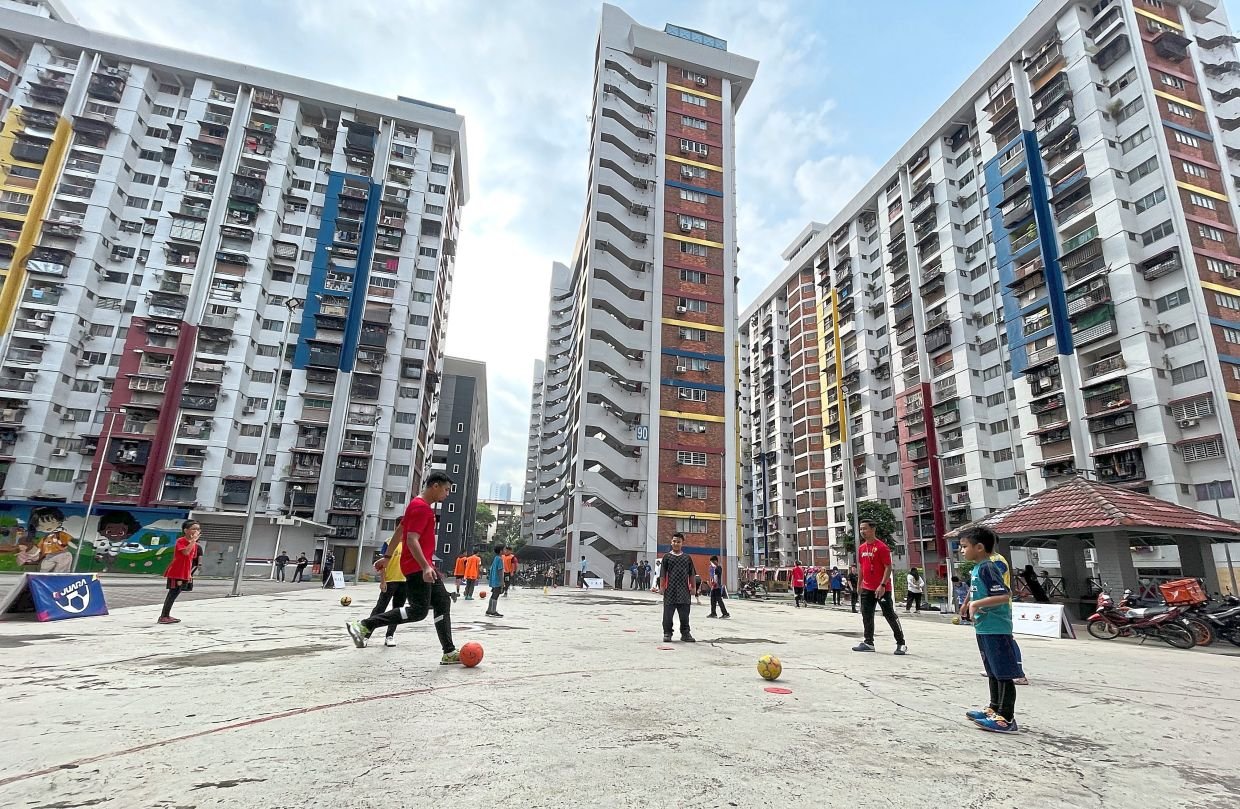
On the other side community clubs operate in a much smaller space. They are born from local initiative. They rely on player fees and small sponsorships. They rent fields that are not always available. They have no clear pathway to climb the league system. They do not receive the same institutional support. They move within a narrow space even though they play an important role in developing young players.
When these two worlds exist in the same ecosystem a wide gap is unavoidable. State teams move with stable resources. Community clubs move with fragile ones. State teams have historical legitimacy. Community clubs have small social legitimacy. State teams exist in a structure designed for them. Community clubs exist in a structure that was never built with them in mind.
Understanding this structure is not about blaming anyone. It is simply an attempt to see Malaysian football with more honesty. We cannot talk about the future of the game without understanding how it was shaped. We cannot talk about grassroots development without seeing how the current structure opens doors for some and closes them for others.
Malaysian football is not static. It changes with time. Yet those changes will not mean much if we do not understand the roots of the issues we see today. In the next episode we will look at how the colonial legacy shaped the state based structure of Malaysian football and why its influence is still felt today.