Review
The Invisible Ceiling [Episode 1]: The Colonial Legacy and the Origins of the State Structure
Malaysian football did not begin as a community project. It began as an administrative one. When the...

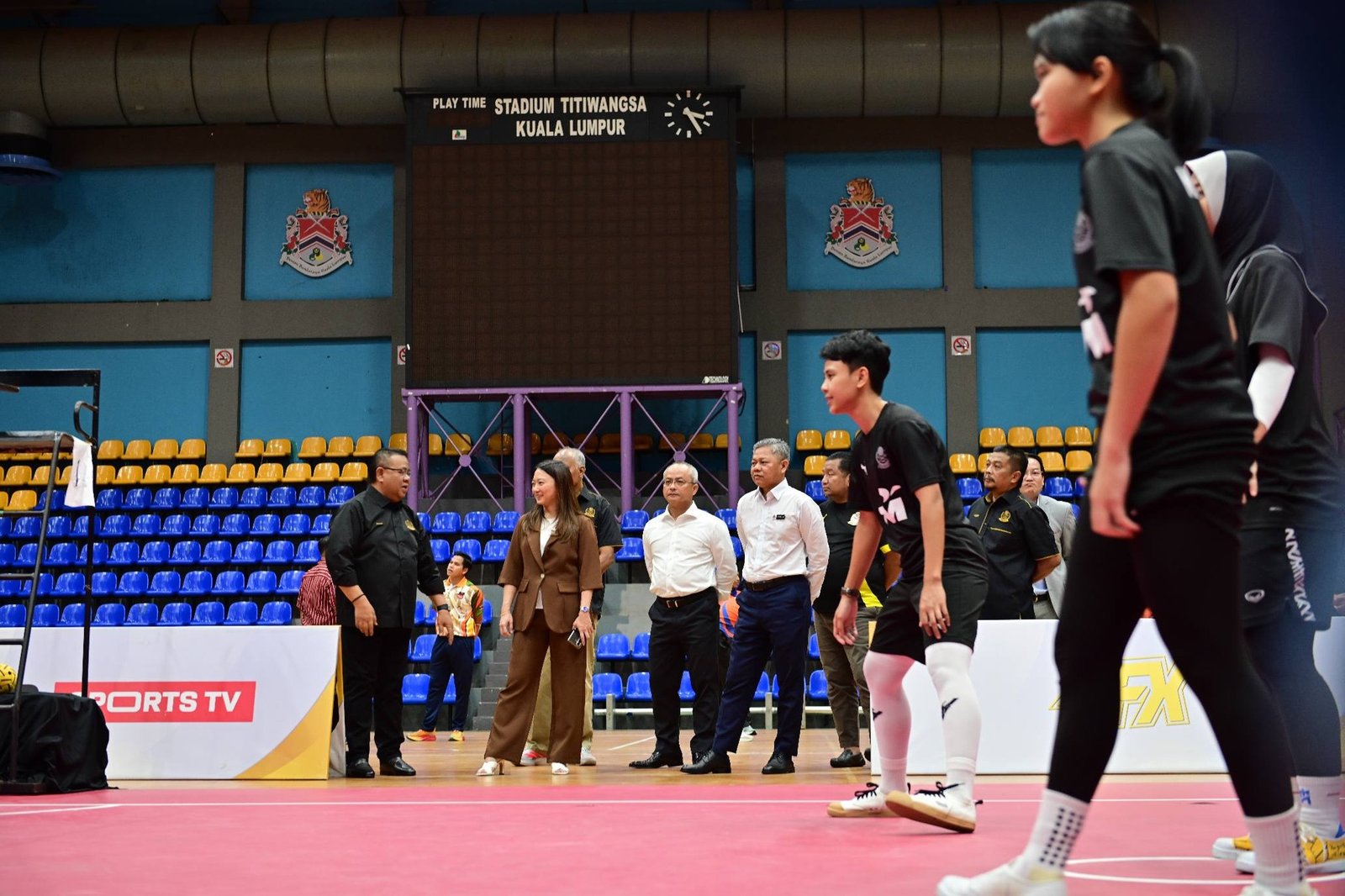
Malaysia’s sporting landscape has long associated certain sports with specific iconic venues. Badminton is often linked to Axiata Arena, while Stadium Nasional Bukit Jalil is regarded as the home of the national football team. Most recently, Stadium Titiwangsa, located in the heart of Kuala Lumpur, has officially been designated as the Home of Sepak Takraw.
On May 23, a simple yet meaningful ceremony was held to declare the 2,000-seat venue as the official “cage” of the national sepak takraw squad. The event was attended by Hannah Yeoh, Minister in the Prime Minister’s Department (Federal Territories), along with a delegation from the Persatuan Sepak Takraw Malaysia (PSM) led by its president, Datuk Sumali Reduan. The date marked a long-overdue recognition for a traditional sport that has finally received the acknowledgement it deserves.
In recent years, Malaysian sepak takraw has enjoyed a resurgence on the international stage, reclaiming its status from long-time rivals, Thailand. Consecutive triumphs since 2024 — including the ISTAF World Cup, the ASTAF Asian Cup, and the Southeast Asian Games — have restored Malaysia’s image as a global powerhouse. For years, Malaysia was overshadowed by Thailand and, at times, challenged by Indonesia and South Korea. Today, the nation has reclaimed its position at the top.
Although she no longer serves as Minister of Youth and Sports, Hannah Yeoh has continued to leverage her role related to the Federal Territories to ensure sepak takraw receives proper recognition. She highlighted that Stadium Titiwangsa is the only indoor stadium owned and managed by Kuala Lumpur City Hall (DBKL), making it the ideal venue to serve as the national team’s official base.
“Titiwangsa Stadium is the only indoor stadium owned by Kuala Lumpur City Hall (DBKL) and serves as a key venue for government agencies, private organisations, schools, as well as non-governmental organisations (NGOs) to host sports programmes and events. The establishment of the ‘Home of Sepak Takraw’ is highly significant as it provides a more systematic, structured, and performance-focused training platform,” she said.
With this recognition, the stadium’s role in developing sepak takraw becomes even more significant, as PSM is now permitted to plan and implement various programmes at the venue. Hannah also assured that DBKL would ensure the stadium is fully equipped with complete sepak takraw facilities and that the equipment will be properly utilised for training sessions and tournaments.
At the same time, DBKL has undertaken upgrading works costing RM80,000. These improvements include supplying sepak takraw equipment, replacing the scoreboard with a new LED display, and upgrading facilities such as the VIP room, meeting room, surau (prayer room), and restrooms.
This recognition places sepak takraw on par with football and badminton in terms of value and prestige, rather than being viewed solely as a traditional heritage sport.
So, what lies ahead for sepak takraw? The answer is clear: development programmes must continue, even though Malaysia now holds world titles. Sustaining success is never easy. Continuous and enhanced development efforts are essential to ensure Malaysia consistently produces world-class sepak takraw stars.
One notable initiative by PSM is the organisation of Sepak Takraw Clinics targeting students from Chinese and Tamil vernacular schools (SJKC and SJKT). This demonstrates PSM’s commitment to ensuring that the sport is not confined to the Malay community alone, but instead embraces participation from the country’s other major ethnic groups.
While the results may not be visible today, in 10 to 20 years Malaysia could potentially produce a left-footed tekong of Chinese descent or a powerful “killer” of Indian heritage. The possibilities are exciting.
Additionally, the Sepak Takraw League (STL) plays a crucial role in maintaining the quality of national players throughout the season. After a decade of organisation, the league has successfully created a competitive sepak takraw environment in Malaysia, which in turn strengthens the national squad when competing internationally.
In fact, followers of the sport in Thailand have acknowledged that Malaysia’s league organisation is superior to what they currently have. However, given the relatively short duration of STL each year, it would be worthwhile for PSM to consider extending the league period.
If the league could run for six to nine months annually, it would generate more matches for each player, further accelerating development and competitiveness.
One of the challenges facing PSM is that it must pioneer every major change in elevating sepak takraw to the global stage. Unlike football, which looks to Europe for reference, or badminton, which often turns to China for benchmarks, Malaysia itself sets the standard in sepak takraw. The world looks to Malaysia for direction in shaping the sport’s future.
If Malaysia manages the sport properly, other nations will follow. The ultimate dream is to see sepak takraw included in the Olympic Games — and that journey begins with Malaysia as the custodian of the sport.