Let’s be honest: the Football Association of Malaysia (FAM) is currently less of a “sporting g...

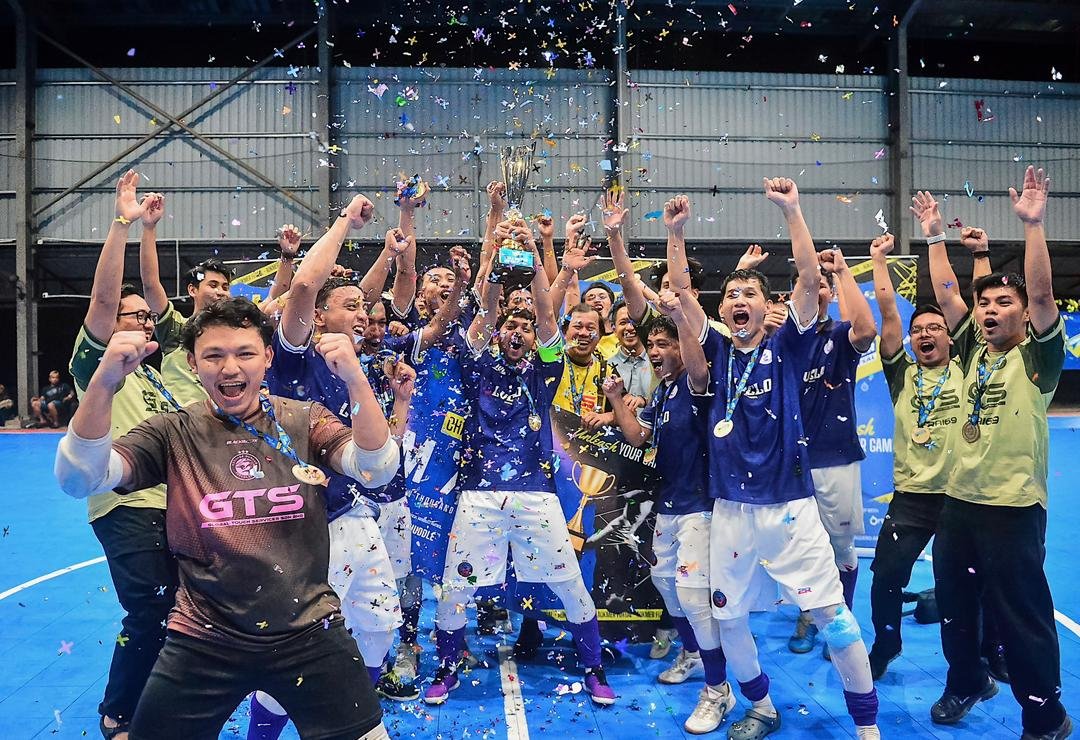
Let’s be honest, local community sports usually operate with the thrilling atmosphere of a Tuesday afternoon council meeting. You show up, you see some earnest, slightly clumsy effort, and then you forget about it until next year. But then, you step into the Sergio Aguero Arena during the climax of Aokmer Futsal, and suddenly, everything changes. The air is thick with the scent of cheap liniment and expensive adrenaline. The crowd is howling like they’ve just witnessed a major political scandal.
This isn’t your grandad’s tepid, charity-drive futsal tournament; this is a year-round, blood-and-thunder spectacle forged by Yayasan Pahang. It’s so well-produced, so utterly professional in its amateur execution, that it makes 90% of the world’s “official” leagues look like they’re being organized by three bewildered children and a stressed-out hamster.
What we’re looking at here is not just a bunch of lads kicking a small ball around; this is a paradigm shift. Aokmer Futsal is the competitive amateur league that Pahang’s futsal scene needed, and it arrived with the subtlety of a runaway train hitting a bicycle shed.
They’re streaming 63 group stage games on YouTube, complete with Precision Futsal Data Scouting & Analytics. Data analytics for amateur futsal. Imagine! We’ve got local players who, three months ago, were probably arguing about their office fantasy league, now being scrutinised by AI cameras managed by Huddle and analysed with the thoroughness usually reserved for finding errors in a nuclear reactor. It’s glorious overkill. It’s what happens when grown-ups realise that if you want people to care, you have to treat their hobby like it’s the Champions League final. The fact that this league has made the average amateur futsal game feel like a legitimate sporting event is proof that conventional wisdom—that sports success only grows from the top down—is an absolute, embarrassing lie.
This, ladies and gentlemen, is the secret sauce to organic and sustainable sports growth, a phrase usually muttered by consultants just before they cash a massive cheque. Forget those expensive, fleeting “High Performance Camps” that parachute in for a week and then disappear forever. That’s just spraying perfume on a skip fire.
The real, unglamorous truth is that you need a competitive middle tier so deep and so vast that it acts like a giant, churning washing machine of talent. Aokmer Futsal is that washing machine. It’s where your average talented 20-year-old can play meaningful, high-pressure games every week without having to quit their actual job.
This perpetual churn is the feeder system for the elite Pahang Rangers FC. Why fly in a mediocre import player when you have 500 desperate, locally-sourced athletes performing under broadcast lights every week, fighting like rabid badgers for a sliver of glory? This league provides the Darwinian pressure needed to forge actual quality. It means the talent pool isn’t a puddle; it’s an ocean. The local community isn’t just watching; they’re participating, they’re arguing, they’re forming local rivalries that are probably more intense than the last general election. When you create local heroes, you create lifelong fans. It’s not rocket science; it’s just common sense, which is why it’s so rarely done.
I spoke to a guy who plays for a team all the way from Cameron Highlands. He said, “Before Aokmer Futsal, it was just a knockabout. Now? We train properly. We watch the videos. My wife is actually proud of me, and there’s a guy across where I live that wants my autograph.”
See? Life-changing.
This league is a brilliant, shining beacon that proves that if you give people a stage, they will put on a show. It gives purpose to the millions of hours spent honing skills in parking lots and community halls. It transforms passive sports consumption into active, furious, local ownership. The cultural impact is immense—it creates a local weekday night ritual that involves screaming at a referee instead of just scrolling through TikTok.
So, Aokmer Futsal is more than just a tournament; it’s a blueprint. It’s a loud, well-organized, slightly sarcastic instruction manual for how to grow any sport in any local area: make it competitive, make it visible, and treat the amateurs like the stars they desperately want to be.
If this momentum continues—and I demand that it does—Pahang won’t just be good at futsal; it will be a powerhouse, built from the asphalt up. The rest of the country should take note. This is how you build a legacy, one perfectly-placed, outrageously aggressive pass at a time.