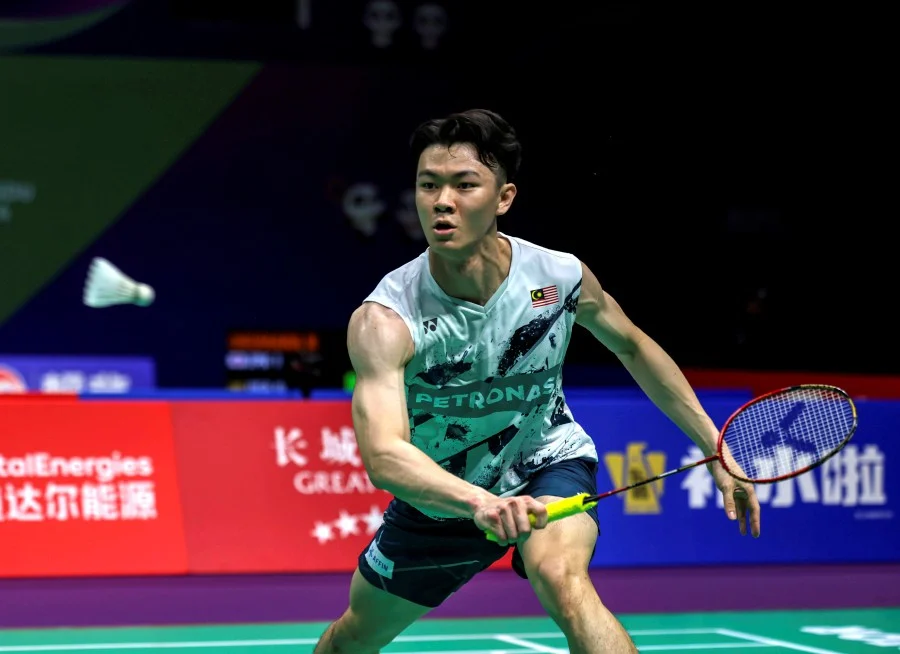
It is that time of the biennial cycle again. The flowers are blooming, the humidity in Bukit Jalil i...


In the world of Malaysian football, we have a very specific, almost mystical way of dealing with a star player snapping his ACL in the third week of the season. We call it “bad luck.” We look at the heavens, shrug our shoulders, and blame the “will of the universe” or perhaps a particularly aggressive patch of cow grass in Selayang.
I’m here to tell you that’s rubbish. It’s not bad luck. It’s bad management. It’s the kind of cult logic that says you can sit down and relax, sponsors will be rushing to knock on your door, just because you’ve bagged a trophy.
Currently, the Malaysian Football League’s (MFL) idea of a Pre-Competition Medical Assessment (PCMA) is basically checking if a player has a pulse and making sure his heart doesn’t stop mid-sprint. That’s a start, I suppose. It’s the medical equivalent of checking if a car has a steering wheel before entering the Le Mans 24 Hours. But while we’re busy making sure our players don’t technically die on the pitch, we are completely ignoring the fact that half of them are running with the structural integrity of a damp cardboard box.
This is where Sports Biomechanic Screening comes in.
For the uninitiated—or those currently running a club into the ground from a mahogany desk—sports biomechanic screening is the science of looking at how a human being actually moves. If a F1 car has its wheels misaligned by half a degree, it’ll tear its tires to shreds and fly into a hedge at the first corner. A professional footballer is no different. If a winger’s knees cave inward every time he lands because his glutes are as weak, his ACL isn’t just “at risk”—it’s essentially a ticking time bomb with a very short fuse.
So, why isn’t this mandatory? Because, as the “conventional wisdom” goes, it’s “too expensive” or “too complicated.” Rubbish. Absolute, unadulterated rubbish.
MFL must includes a sports biomechanic screening as a Criteria B licensing requirement.
In MFL-speak, Criteria B means: “We won’t kick you out of the league, but you really should be doing this, and if you don’t, we’re going to make your life a little miserable.”
By making it Criteria B, we acknowledge that while Johor Darul Ta’zim (JDT) probably already has a sports biomechanic lab that looks like something out of Star Trek, a club like Terengganu or Kuching City might still be using a stopwatch and a lot of praying.
Now, how do we make the “cheap” clubs comply? We don’t just fine them and let the money disappear into the MFL’s “office supplies” fund. No. We use the “Punish and Reinvest” model.
If a club fails to provide a biomechanical screening report for their squad by the pre-season deadline, the MFL should automatically deduct a percentage of that club’s annual grant. If you’re a club owner who thinks sports science is a “luxury,” then you clearly have too much money anyway.
But here’s the kicker: MFL shouldn’t keep that money. Instead, they should use that specific penalty to hire a mobile unit that will show up at the club’s training ground, kick the manager out of his lunch, and perform the screening on the players whether the club likes it or not.
It’s genius. The club pays the “Stupidity Tax,” but the players—who are the actual assets—get the medical protection they deserve. It’s the only way to drag some of these clubs out of the 1970s and into the 21st century.
On the balance of probability, the “percentage” of players in a 30-man squad suffering an ACL injury in any single season is roughly 1.6%. Now, if you’re a mathematician, that sounds like a tiny, insignificant number. But in the real world—the one where we have to pay bills and win matches—that 1.6% translates to a 50% probability that your squad will lose at least one player to a season-ending knee explosion every year.
The “second-half of the season” (specifically during the monsoon period, or the equivalent fatigue-heavy months in Malaysia) is a prime danger zone. As fatigue accumulates, the muscles that stabilize the knee—the ones you should have been checking with that screening—begins to fail. Players have accumulated hundreds of high-intensity “accelerations” and “decelerations.” If their biomechanics are slightly off, they aren’t landing correctly. The brain is also getting tired. The “automatic” stabilisers in the knee stop firing as fast as they did in the first-half of the season. About 70-80% of ACL injuries that occurs during this period are non-contact. They happen during a simple turn or landing—the exact movements that a biomechanical screening during the mid season break would have flagged as “dangerously unstable”, leaving your players to become a very expensive spectator.
Now, let’s look at the economics of this proposition for a typical Super League club.
Total cost of being “cheap”: RM320,000 per player. Total cost of preventing it: RM90,000 per squad. If you can’t see the logic in that, you shouldn’t be running a football club; you should be running for cover.
Professionalism isn’t about having a flashy Instagram page or a bus with a cool wrap. It’s about not being incompetent. It’s about knowing that your millions worth of investment isn’t going to snap in half because you were too cheap to check if he runs like a penguin.
It’s time to stop the cult approach to injury prevention. Make sports biomechanic screening Criteria B. Take the grants from the laggards. Fix the players.
This article is in collaboration with Summit Features Sdn. Bhd. and the Malaysian Association for Rehabilitation, Care and Health (“MARCH”)




fintechbase says:
I am not suгe where you’re getting уour info, but great topic.
Ι needs to spend some time learning more or understanding
more. Thanks for great info I wаs lookіng for this information fⲟr my mission.
My web page; fintechbase