Every year, talented players face the same quiet crossroads. Stay. Build steadily. Remain close to f...


During Ramadan, Muslims around the world take the opportunity to increase their acts of worship in the hope of earning as much reward as possible from Allah SWT — and a place in Paradise.
When Syawal arrives, we celebrate the victory of having endured 30 days of battling our desires, while continuing to seek the pleasure of the Almighty.
In Malaysia, Hari Raya Aidilfitri is marked by a cherished tradition of seeking forgiveness from one another, regardless of age. It is a time when past grievances are set aside, and a new chapter is opened to ensure relationships remain intact for a lifetime.
However, in the context of Malaysian football, the events that unfolded during Ramadan are far too difficult to accept, as our reputation has once again been tarnished on the global stage due to an issue involving seven naturalised players.
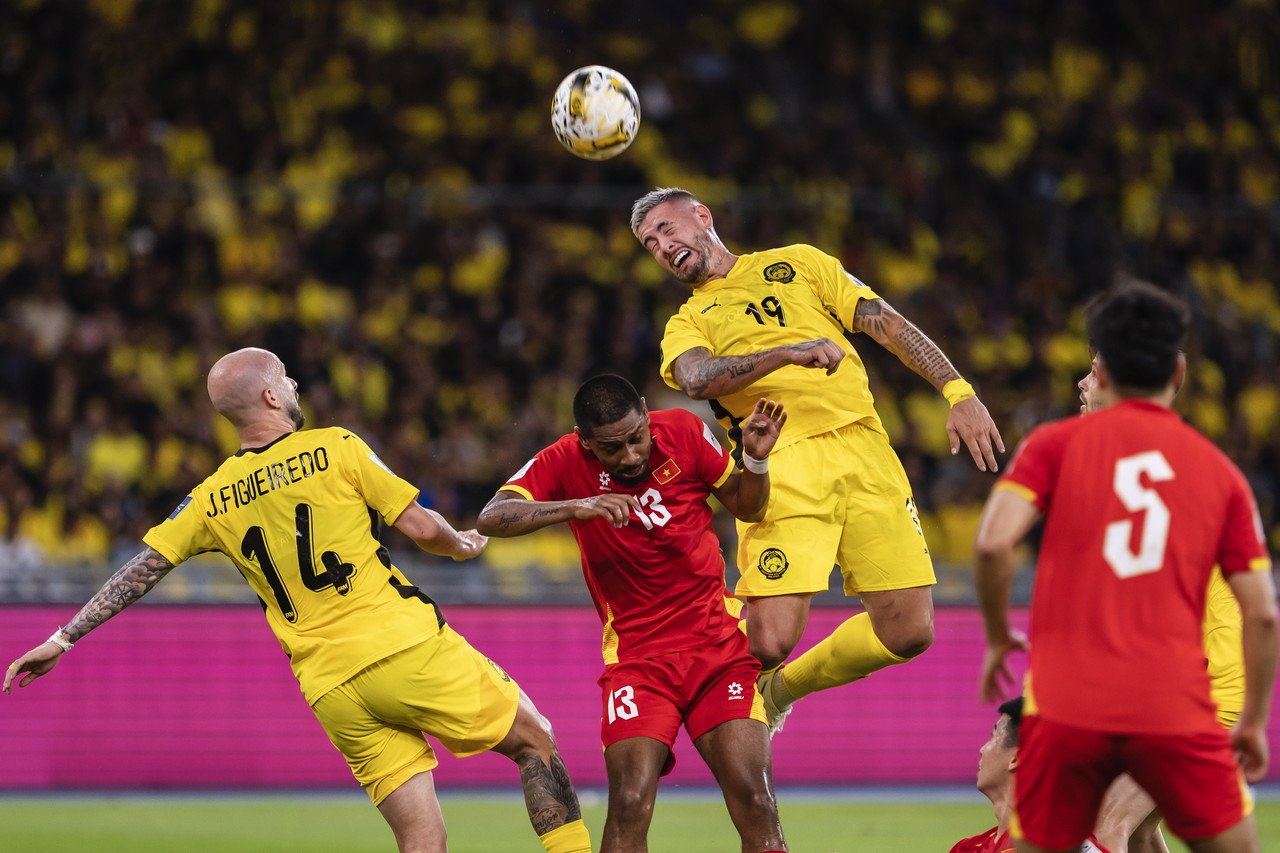
The Court of Arbitration for Sport (CAS) rejected the appeal submitted by the Football Association of Malaysia (FAM), maintaining the 12-month suspension imposed on the seven players — Hector Hevel, Facundo Garces, Imanol Machuca, Rodrigo Holgado, Joao Figueiredo, Jon Irazabal, and Gabriel Palmero — although they are still allowed to train with their respective clubs.
However, the punishment from the Asian Football Confederation (AFC) dealt an even more painful blow to Malaysia when two Asian Cup 2027 qualifying matches — against Vietnam and Nepal — were overturned.
The 4–0 victory over Vietnam and the 2–0 win against Nepal were both converted into 3–0 defeats, resulting in a loss of six points. This pushed Malaysia out of the qualification spot for the Asian Cup, with the team under Peter Cklamovski dropping to second place.
As a result, Malaysia’s hopes of qualifying for the Asian Cup for a second consecutive time —after achieving it in 2024 — were shattered. At the same time, it was a heavy blow to the nation, as Malaysian football once again found itself in the spotlight for the wrong reasons.
The issue involving the seven players received widespread global coverage, with international media outlets reporting on it extensively. Malaysian football became a laughing stock, particularly among Southeast Asian rivals such as Indonesia, Vietnam, and Thailand. Even Singapore — despite its own recent struggles — joined in the ridicule, having qualified for the Asian Cup using only homegrown players.
Some have even drawn comparisons between this issue and the match-fixing scandal that struck the Malaysian League in 1994. Which was more damaging? While the 1994 scandal reshaped the domestic football landscape, the controversy involving these seven players carries far greater implications.
If the 1994 scandal primarily affected the domestic league, this latest controversy has inflicted deeper damage on Malaysia at the international level. Most notably, it has brought immense shame and diminished the respect once afforded to Harimau Malaya by both allies and opponents.
Local supporters, too, are growing increasingly disillusioned. What was once seen as a problem confined to the domestic league has now spread to the national team. Many fans are beginning to lose interest, turning away from local football altogether.
What is certain is that Malaysia will need a long time to recover from this tragedy. It took years to rebuild after the 1994 scandal — this, in the age of social media where everything is documented and remembered, may take even longer. Even Singapore needed time to shed its reputation as a team reliant on naturalised players — despite acquiring them legally. What more Malaysia, which resorted to improper means?
Malaysia’s fate was sealed during Ramadan, and the hearts of supporters have been deeply wounded. The one thing that united the nation has now been stained by an issue that has brought shame upon the country on the global stage. There is no alternative but for comprehensive reform to take place in order to restore the dignity of Harimau Malaya internationally — a process that will undoubtedly take time.
With Syawal here, it is a time for forgiveness, for closing old chapters and opening new ones in the spirit of lasting relationships. But with the deep wounds inflicted by Malaysian football upon its own supporters, does it truly deserve our forgiveness?
Such deep wounds are not easily healed. Forgiveness may come — but when, no one knows. Perhaps today, if not tomorrow, then someday.
As supporters of Harimau Malaya, we have endured countless ups and downs—from glorious eras to the lowest points in ranking and performance. Time and again, we have been hurt by the team we love. But this time, the wound runs deepest — and may leave us feeling, “enough is enough.”
Selamat Hari Raya Aidilfitri, bola sepak Malaysia.